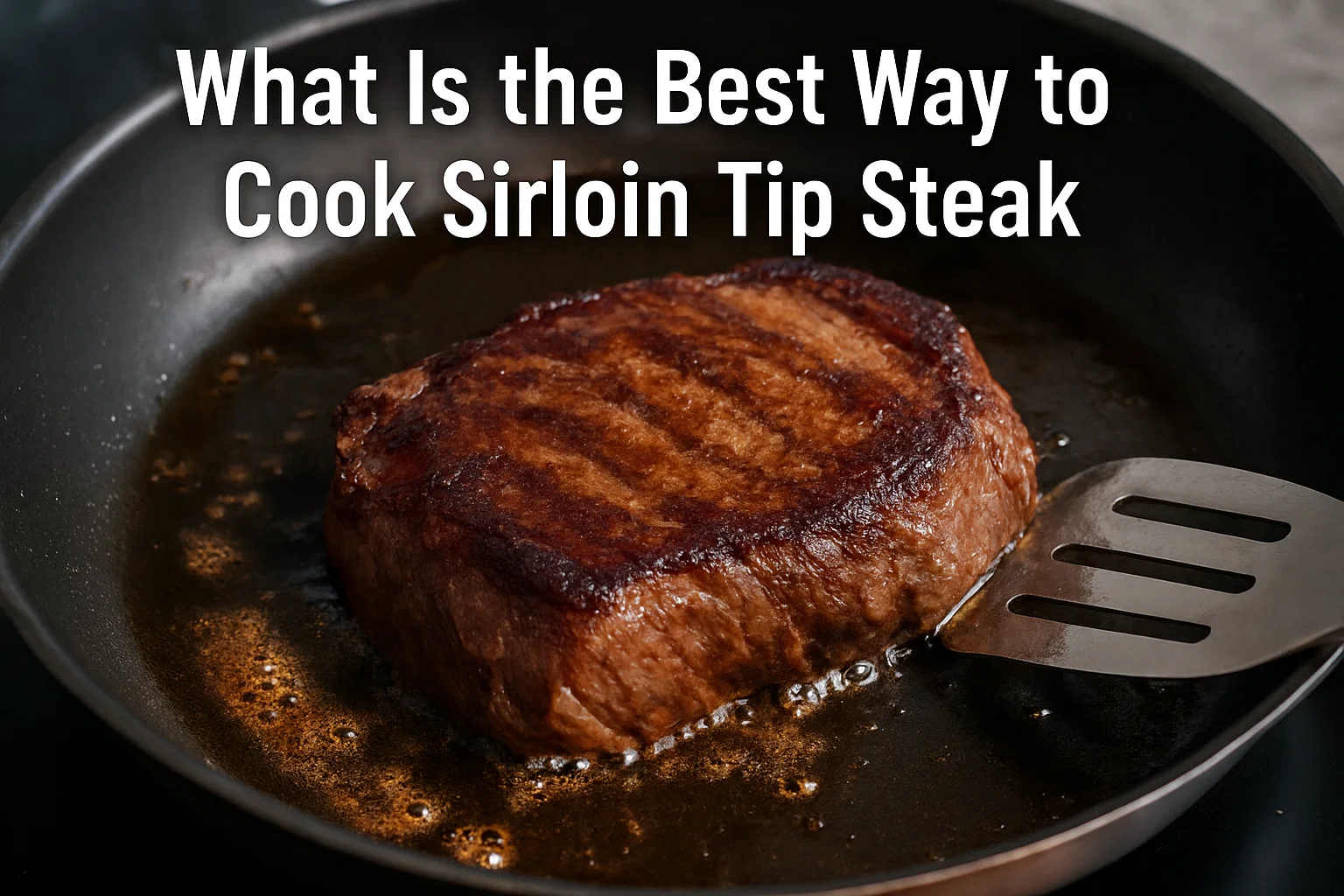
My jaw actually clicked. That is not a joke. I was twenty-two, broke, and sitting in a folding chair in my first apartment. On the plate in front of me sat a piece of meat that looked like a steak but ate like a radial tire. I had seen “Sirloin Tip” at the grocery store for a price that seemed too good to be true. I bought three pounds of it. I thought I had hacked the system. I thought I was the smartest guy in the butcher shop.
I was wrong. Dead wrong.
I had thrown that lean slab of red meat directly onto a charcoal grill with zero prep, just a little salt and fire. The result? Shoe leather. I sat there sawing at it with a serrated knife, watching my buddies politely struggle to swallow without choking. It was humiliating. That dinner wasn’t a meal; it was a workout.
Since that disaster, I have obsessed over this specific cut. I refused to let a cheap piece of beef beat me. If you are frantic, staring at a package of meat and asking, “what is the best way to cook sirloin tip steak,” stop looking for complex cooking techniques. The secret isn’t on the grill. The secret happens hours before you even light a match. It is all about the marinade. You have to transform the structure of the meat before you cook it.
More in Beef & Red Meat Category
What is The Best Way to Cook Sirloin Steak
What is The Best Way to Cook a Tomahawk Steak
Key Takeaways
- You cannot skip the soak: This muscle is a worker; it is tough and fibrous. It demands acid to break down.
- Watch the clock: Timing is everything. Four hours is the minimum, twelve is gold, but go over twenty-four and you ruin it.
- Slice it like you mean it: Cutting against the grain isn’t a suggestion; it is the only way to make this edible.
- Heat control is king: This steak hates medium-well. Sear it hard, cook it fast, and get it off the heat.
- Don’t fear the salt: Lean beef needs aggressive seasoning to wake up the flavor.
Why is my sirloin tip steak always so tough?
To cook this right, you have to respect the animal. The sirloin tip comes from the round primal—the front of the hind leg. Think about what a cow does all day. It walks. It stands. It supports a thousand pounds of weight. That leg never stops working.
Because that muscle is constantly firing, it builds up dense, tight muscle fibers and very little intramuscular fat. Compare that to a Ribeye or a Tenderloin. Those cuts sit high up on the back. They barely do any work. They are lazy muscles, so they stay tender. The sirloin tip is the gym rat of the cow. It is lean, mean, and stubborn.
When you throw intense heat at those tight fibers without prepping them, they panic. They seize up. They wring out every drop of moisture inside them like a wet towel. That is why my college barbecue failed. I treated a marathon runner like a couch potato. The “tip” is actually the knuckle, completely different from the Top Sirloin you get at a steakhouse. Mixing them up is the most common rookie mistake I see guys make at the meat counter.
Can a simple marinade really fix a cheap cut?
Yes, but drop the idea that a marinade is just for flavor. That is secondary. When we talk about what is the best way to cook sirloin tip steak, we are talking about chemical warfare. You need to break down the collagen sheaths binding those muscle fibers together.
I have a buddy, Dave. Dave considers himself a “meat purist.” He swears that marinades are for people who buy bad meat. He told me once that “good beef stands alone.” So, I invited him over to prove him wrong.
I bought a whole sirloin tip roast and cut two identical steaks. Steak A went straight on the grill with salt and pepper. Steak B spent the night swimming in a mix of soy sauce, balsamic vinegar, and garlic.
I served Steak A first. Dave took a bite, chewed, and gave me that polite nod. “It’s beefy,” he said. Then I dropped Steak B on his plate. He cut into it, and the knife slid through with half the resistance. He took a bite and stopped chewing for a second. He looked at me, took another bite, and didn’t say a word until the steak was gone. The acid had unraveled the proteins, and the salt had pulled moisture deep into the center. Dave doesn’t argue with me about marinades anymore.
What ingredients do you absolutely need?
You don’t need a pantry full of exotic spices. You need a structural plan. My marinade strategy follows a strict “Rule of Three.” If you miss one of these pillars, you just have wet, tough meat. You need an Acid, a Fat, and a Salt.
Why is acid the heavy lifter here?
Acid is your tenderizer. It attacks the connective tissue. Without it, you are wasting your time. I almost exclusively use Balsamic Vinegar for sirloin tip. It brings a dark, complex sweetness that chars up beautifully on the grill.
If you don’t have balsamic, don’t just grab anything. Lemon juice is aggressive; leave it on too long and the meat gets mushy and gray, like bad ceviche. Red wine vinegar is a solid backup. It gives you that classic bistro flavor profile. But avoid plain white vinegar unless you want your dinner to taste like a pickle jar.
Does salt dry out the meat?
I hear this myth constantly. “Don’t salt it until the end, you’ll dry it out!” Nonsense. Salt is the vehicle for flavor. Initially, sure, it draws a little moisture to the surface. But let it sit. The brine creates a reverse osmosis effect. The meat sucks that seasoned liquid back in.
I don’t use table salt for this. I use liquid salts. Soy Sauce or Worcestershire sauce are non-negotiable in my house. They pack a sodium punch, but they also bring glutamate—umami. It makes a five-dollar steak taste like it has the depth of a twenty-dollar cut.
Which aromatics actually work?
Freshness is the only thing that matters. Throw away that jar of garlic powder from 2019. It tastes like dust. Smash three cloves of fresh garlic with the flat of your knife. Peel them and toss them in whole.
I grow rosemary on my back porch, so I snap a few sprigs, bruise them in my hand to release the oils, and drop them in the bag. Thyme works too. These herbs infuse the oil, which then coats the meat. It smells incredible when it hits the hot metal later.
The “Father-in-Law” Incident
Let me tell you about the most stressful meal of my life. I had just started dating my wife, and her dad invited us over. He is an old-school guy. He judges a man by his handshake and his grilling. I offered to cook to score some points. I bought sirloin tips because I was broke but wanted to feed everyone.
I decided to get “fancy.” I made a marinade with just olive oil and fresh herbs. No acid. I didn’t want to “mask the flavor of the beef.” I let it sit for an hour.
I grilled them. They looked great. I put a steak in front of him. He cut a piece, put it in his mouth, and the table went silent. He chewed. I watched his jaw muscles working. He took a sip of water. He chewed some more. It felt like ten minutes passed. Finally, he swallowed, looked me dead in the eye, and said, “Strong jaw exercise, son.”
I wanted to crawl under the deck.
I went back the next weekend. I brought the same cut. But this time, I had marinated it for 12 hours in balsamic, soy, oil, and brown sugar. I watched him take that first bite. He didn’t say anything about his jaw. He just asked, “What did you put in this?” That redemption tasted better than the steak.
How long is too long?
You have a window. Respect the window.
For sirloin tip, you need at least 4 hours. Less than that, and the flavor is just sitting on the surface like paint. The sweet spot is 8 to 12 hours. Put it in the fridge before you go to bed, or first thing in the morning before work.
But be careful. If you go past 24 hours, the acid stops tenderizing and starts digesting. The outer layer of the meat turns to mush.
I made this mistake once for a reunion with my college roommates. I forgot the bag in the fridge for two days. I cooked them anyway. The texture was horrifying. It was mealy, soft, and spongy. One of my friends asked if I was serving liver. They ordered pizza. I ate my spongy steak out of stubbornness, but I learned my lesson. Do not disrespect the clock.
Is grilling the only way to cook this?
I love fire. Standing over charcoal with a cold beer is my happy place. But grilling isn’t always the best move for sirloin tip.
Because this steak is so lean, open fire can dry it out fast. Honestly? A cast-iron skillet often does a better job. You get a flat, even surface that creates a crust—we call it the Maillard reaction—that a grill grate just can’t match. The sugars in the marinade caramelize against the iron, creating this dark, sticky bark that is unbelievable.
How to pan-sear without smoking out the house
Open a window. Turn on the fan. Get the pan ripping hot. I mean, let it sit on the flame until you can feel the heat radiating off it from six inches away.
Here is the trick I learned the hard way: Dry your steaks. Pull them out of the marinade and pat them down with paper towels. If they are wet, they will steam. You don’t want boiled meat. You want a sear. Throw them in a hot pan with avocado oil (it handles heat better than olive oil). You want to hear a violent hiss. If it gently sizzles, your pan is too cold. Pull it out and wait.
The reverse sear: Is it worth it?
If your butcher cut the steaks thick—over an inch—then yes. The reverse sear is a game-changer. Bake them low and slow at 225°F until the inside hits 115°F. Then sear them for one minute per side in that scorching skillet. You get wall-to-wall pink perfection. If the steaks are thin, don’t bother. You will just overcook them.
The art of slicing (Do not mess this up)
You nailed the marinade. You nailed the cook temp (130°F for medium-rare, always). You can still ruin everything in the last ten seconds.
You have to slice against the grain.
Look at the meat. You see those lines running through it? Those are the muscle fibers. If you cut with them, you are leaving long strands of fiber that your teeth have to snap. That equals chewy.
Turn the steak. Cut across those lines. You are manually shortening the fibers for your mouth. For sirloin tip, I slice it thin, on a bias (a 45-degree angle). It makes the meat feel twice as tender. I serve it pre-sliced on a wooden board. It looks rustic, and it guarantees nobody at the table accidentally saws off a chewy chunk.
What should you serve with it?
Since this marinade packs a punch—salty, savory, acidic—you need sides that can fight back.
I stay away from soft, bland sides. Mashed potatoes are okay, but roasted potatoes are better. I smash baby potatoes flat, drown them in butter and rosemary, and bake them until they are crispy. They soak up the steak juices on the plate.
For greens, skip the iceberg lettuce. It’s watery and boring. Go for bitterness. Grilled asparagus with lemon zest cuts right through the richness of the meat. Or do Brussels sprouts roasted in bacon fat until they are almost burnt. The char on the veggies matches the char on the steak.
Can you save the leftover marinade?
Stop. Do not pour that raw bag juice over your cooked steak. That liquid is full of raw beef bacteria. It is a biological hazard.
But, you can save it if you cook it. And you should. Pour that dark, flavorful liquid into a small saucepan. Boil it. I mean a hard, rolling boil for at least five minutes. This kills the bad stuff and reduces the liquid into a glaze.
Right before you take it off the heat, whisk in a tablespoon of cold butter. It turns the sauce glossy and rich. Drizzle that over your sliced meat. It tastes like something you’d pay forty bucks for at a downtown bistro.
Why temperature matters more than time
Sirloin tip is unforgiving. A Ribeye has enough fat to save you if you accidentally cook it to medium-well. Sirloin tip does not. If you cook this to medium-well, you are eating drywall.
Buy an instant-read thermometer. Don’t do the “poke test” with your finger. Your finger isn’t calibrated. My hand feels different after holding a cold beer than it does after holding a hot pair of tongs. Use the tool.
Pull the steak at 125°F. It will keep cooking as it rests. If you wait until it hits 135°F to pull it, you are already too late. You overshot the runway. I keep my thermometer in my back pocket. My neighbors might think I look like a nerd, but I serve perfect medium-rare, and they serve charcoal briquettes. I win.
The Verdict
So, what is the best way to cook sirloin tip steak? It is a transformation. You are taking a humble, hard-working muscle and forcing it to relax. You are using acid and salt to break its will.
It doesn’t require a culinary degree. It requires patience. It requires you to plan dinner at breakfast time. Give that meat a bath in something strong. Sear it hot. Slice it thin.
Follow these steps, and you can stop walking past the cheap cuts in the meat aisle. You can grab that sirloin tip, feed your family, and watch them clear their plates. Fire up the grill, pour a drink, and give that tough cut the respect it deserves.
FAQs – What is the best way to cook sirloin tip steak
What is the most effective method to cook sirloin tip steak?
The best way to cook sirloin tip steak involves marinating it for at least four hours, preferably overnight, in an acid-based marinade such as balsamic vinegar, soy sauce, or Worcestershire to break down the tough muscle fibers. After marinating, sear it on high heat for a short period to create a crust, then slice against the grain to ensure tenderness.
Why does my sirloin tip steak tend to be tough?
Sirloin tip steak is derived from a muscle that is used extensively by the cow, specifically from the leg, which results in dense, fibrous meat with little intramuscular fat. These traits make it tougher unless properly marinated and cooked gently with patience.
Can a simple marinade improve the texture and flavor of cheap cuts of beef?
Yes, a simple marinade that includes acid, salt, and fat can significantly improve the tenderness and flavor of cheaper cuts like sirloin tip by breaking down collagen and proteins, and by infusing moisture and umami.
What ingredients are essential in a marinade for sirloin tip steak?
An effective marinade for sirloin tip steak must include an acid such as balsamic vinegar or red wine vinegar, a salt for seasoning and osmosis, and fat such as oil or soy sauce. Fresh garlic and herbs like rosemary or thyme can also enhance the flavor.
Is it better to grill or pan-sear sirloin tip steak?
While grilling can be enjoyable, pan-searing in a cast-iron skillet often yields better results for sirloin tip steak, as it provides even heat and a perfect Maillard reaction, creating a flavorful crust without drying out the lean meat.