I still wince when I think about that date in my early twenties. I really liked this girl. I wanted to show off, so I hit the grocery store and grabbed the biggest piece of red meat I could afford. The label said “London Broil.” It looked impressive—thick, lean, and serious. I had no clue what I was doing. I tossed that massive slab straight onto a scorching grill with nothing but a sprinkle of table salt. I thought I was the king of the patio.
Twenty minutes later, reality hit. We sat there sawing at the meat in awkward silence. It wasn’t steak; it was leather. My jaw actually started cramping. I tried to chew, she tried to be polite, but it was a disaster. That night taught me a brutal lesson: you can’t fake it with this cut. If you are wondering, “What is the best way to cook London Broil,” let me save you the embarrassment I suffered. It isn’t just about fire. It’s about patience. You have to marinate this beast before you even think about cooking it.
More in Beef & Red Meat Category
What is The Best Way to Cook Prime Rib
What is The Best Way to Cook Brisket
Key Takeaways
- Marinate or die: Seriously, you need tough acid to break down those muscle fibers, or you’re eating a shoe.
- Heat needs to be high: You want a hard sear, whether you use the broiler or the grill.
- Watch the temp: Pull it at 130°F. Anything past medium-rare is a crime against this specific cut.
- Slice it thin: Cut against the grain. This is the difference between tender steak and beef gum.
Is London Broil Even a Real Cut of Beef?
Here is the thing that confuses everyone: “London Broil” doesn’t actually exist on the cow. You can’t ask a butcher to point to the London Broil muscle. It’s a scam, or at least a misnomer. It is a cooking method that grocery stores decided to use as a label for specific cuts, usually Top Round or Flank Steak.
I learned this the hard way from an old-school butcher named Sal. He ran a shop down the street from my first apartment. I walked in there one Saturday asking for his “best London Broil,” and he just stared at me over his wire-rimmed glasses. “You want Top Round, kid,” he grunted. “And don’t you dare dry it out.” Sal explained that these muscles are the workhorses of the cow. They move constantly. That means they are dense, lean, and full of tough connective tissue. They don’t have that beautiful web of fat you see in a Ribeye. They don’t baste themselves. You have to do the work.
Why Do You Absolutely Have to Marinate This Cut?
You cannot skip the marinade. I don’t care what some celebrity chef says about “pure beef flavor.” If you skip this, you fail. A marinade does two jobs here. It adds flavor, sure, but its main job is chemical warfare on those tough fibers. You need acid. Vinegar, citrus, wine—something has to get in there and unwind those tight protein strands.
My dad had this trick he swore by. He’d grab a bottle of cheap, zesty Italian dressing from the pantry. He’d stab the meat all over with a fork, toss it in a ziplock bag, and drown it in that dressing for two days. I used to laugh at him, but the man was a genius. The vinegar in that dressing did the heavy lifting.
Now, I make my own mix. I use soy sauce for salt, balsamic for depth, plenty of smashed garlic, and olive oil. But the principle is the same. The salt pulls moisture and flavor deep into the center, while the acid softens the surface. Give it at least six hours. Overnight is better. I once rushed a dinner party and only gave it an hour in the juice. It tasted like surface dressing on a tire. Let it sit.
What Should You Do Before the Meat touches the Heat?
Don’t just rip the meat out of the fridge and throw it on the fire. That is a rookie move. Cold meat hits a hot pan and seizes up. It cooks unevenly—gray ring on the outside, raw in the middle. I always pull the steak out about 45 minutes before I plan to cook. Let it come up to room temperature on the counter. It relaxes the muscle.
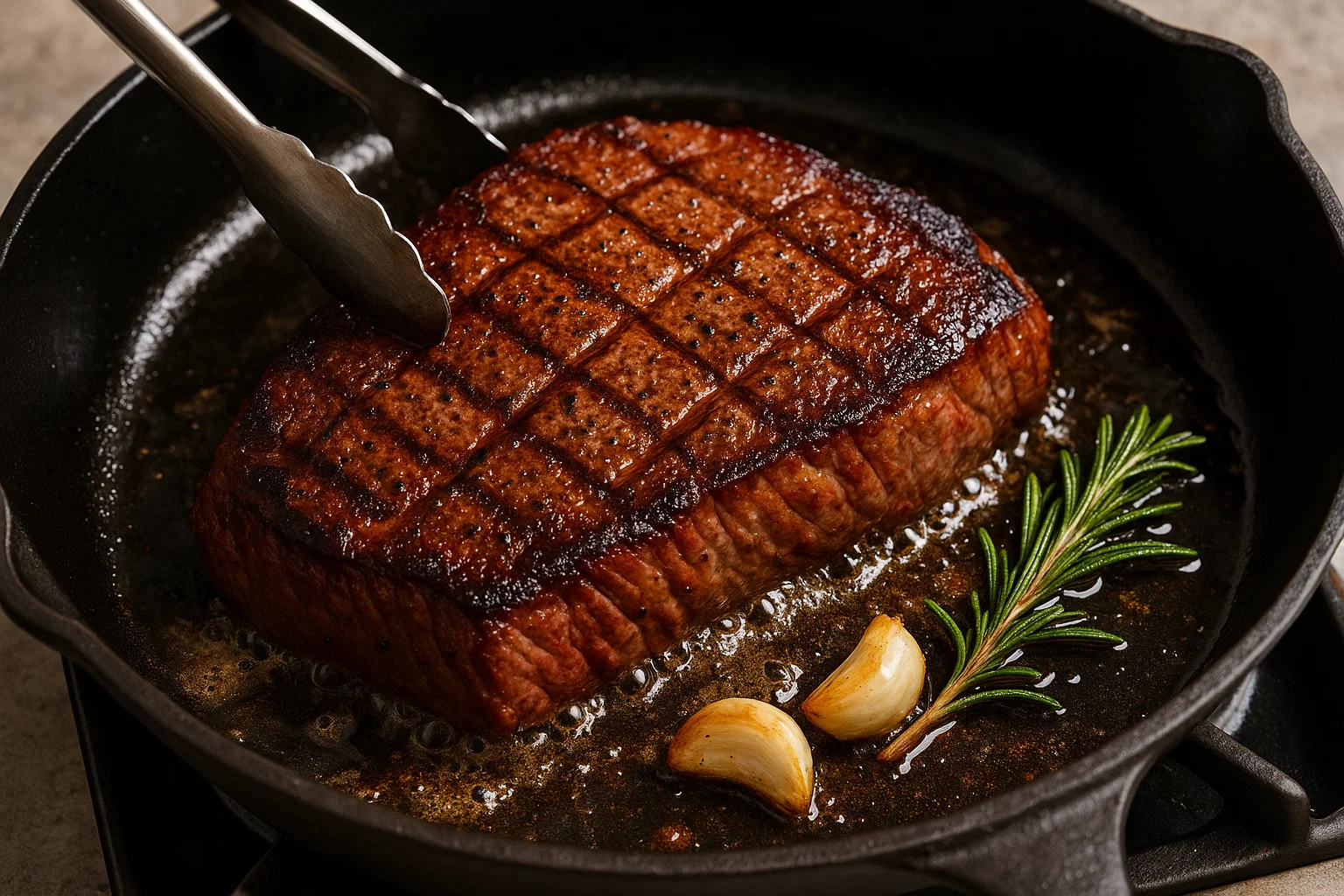
While it sits, I score it. I take my sharpest knife and make shallow diagonal slashes across the surface, creating a diamond pattern. It looks cool, yeah, but it serves a purpose. It stops the steak from curling up like a dying spider when the heat hits it. Plus, it gives the fire more surface area to crisp up.
Then, I dry it. This feels wrong after soaking it all night, I know. But water is the enemy of the sear. If the meat is wet, it steams. Steamed beef is gross. Grab a wad of paper towels and pat it bone dry. Then rub a little fresh oil on it. You want that deep, mahogany crust. That’s where the flavor lives.
Is the Grill Better, or Should You Stick to the Oven?
It depends on the season and your mood. If it’s July and I have a cold beer in my hand, I’m lighting the charcoal. There is a primal flavor you get from fat dripping onto hot coals that an oven just can’t replicate. I set up a two-zone fire—one side hot as hell, the other side cooler. I sear the beef directly over the coals for about 3 minutes a side. You want flames. You want sizzle. Then I slide it over to the cool side to finish.
But the name “London Broil” literally implies using the broiler. In the winter, this is my go-to. I move the oven rack to the top slot, right under the heating element. Crank it to High. I put my cast-iron skillet in there while it preheats. You want that pan screaming hot. When you drop the steak in, it should sound like a jet engine taking off. My dog usually runs out of the kitchen because of the noise.
Broiling is fast and violent. It mimics the grill. Flip it once halfway through. If you have an electric oven, crack the door slightly so the element stays on. You want constant, punishing heat.
How Do You Know When It’s Actually Medium-Rare?
Stop poking the meat. Just stop. That “touch your nose then touch the steak” trick is nonsense. My hands are callous from lifting weights; yours might be soft. It’s not an accurate measurement. Buy a digital instant-read thermometer. It costs like twenty bucks and saves you from ruining a thirty-dollar piece of meat.
London Broil is unforgiving. If you cook it to medium-well, you might as well use it to patch a tire. You want to pull the meat when it hits 125°F or 130°F. No higher. Remember, the temperature keeps rising after you take it off the heat. It’s called carryover cooking.
I learned this on a camping trip with some buddies. I was cooking a massive slab over an open fire. It looked rare to me, so I left it on for “five more minutes.” We spent the rest of the night chewing until our jaws ached. Now, I trust the thermometer. 130°F gives you that bright pink, juicy center that makes this cut worth eating.
Why is Resting the Meat the Hardest Part?
This requires willpower. You just pulled this beautiful, sizzling, garlic-smelling steak off the grill. You want to eat it. Don’t.
Imagine you just ran a 100-meter sprint. Your muscles are tight, your blood is pounding. If someone asked you to solve a puzzle right then, you couldn’t do it. Meat is the same. Under high heat, the juices bunch up in the center of the muscle. If you slice it right now, that juice spills out all over the cutting board. You lose the moisture you worked so hard to keep.
Resting lets the fibers relax. The juices flow back out to the edges. I tent it loosely with foil—don’t wrap it tight or you’ll steam the crust soft—and set a timer for 10 minutes. Pour a drink. Wash the tongs. Just don’t touch the meat. I watched a friend slice a steak immediately once; his plate was a pool of blood and the meat was dry as dust. Wait the ten minutes.
What is the Secret to Slicing It Right?
This is the final boss battle. You can nail the marinade, the sear, and the rest, and still ruin dinner if you butcher the slicing. You have to cut against the grain. Look at the meat. You see those lines running down the length of it? Those are the muscle fibers. If you cut parallel to them, you are giving your guests long, rubbery strings to chew on.
Turn the meat 90 degrees. Position your knife across those lines. Slice thin. I mean really thin—like 1/4 inch or less. You are mechanically shortening those tough fibers so your teeth don’t have to do the work.
My grandfather used to carve the Sunday roast with this terrifying electric knife that sounded like a chainsaw. He made a huge production out of finding the grain. “We do the work with the blade,” he’d tell me, “so we don’t have to work at the table.” Use a sharp knife. A dull one just mashes the juice out. One clean stroke.
Can You Use Sous Vide to Cheat?
I love kitchen gadgets. If you have a sous vide machine, use it. It’s honestly a cheat code for London Broil. You seal the seasoned meat in a bag and drop it in a water bath at a precise temperature.
I tried this a few weeks ago. I set the bath to 131°F and let it swim for six hours. Because the water never gets hotter than that, you can’t overcook it. The long time breaks down the collagen perfectly.
When it comes out of the bag, it looks gross. Gray and wet. Don’t panic. Dry it off completely, then sear it in a smoking hot pan for 45 seconds a side just to get the crust. The texture was mind-blowing. It ate like a filet mignon but cost a fraction of the price.
What Can You Do With the Leftovers?
I’ll be honest, sometimes I cook this just so I have lunch for the next three days. Cold, thin-sliced London Broil is incredible. My go-to is a steak sandwich. Get a crusty baguette, slather it with horseradish mayo, pile on the cold beef, and hit it with some sharp cheddar and arugula.
You can also throw the strips into a stir-fry. Since the beef is already cooked, just toss it in at the very end to warm it through. Or make a steak salad with blue cheese and walnuts. The iron-heavy flavor of the beef stands up to strong ingredients.
Just promise me one thing: do not microwave the leftovers. Please. It ruins the texture and gives it that funky “warmed-over” taste. Eat it cold, or warm it gently in a pan with a little butter.
How Do You Make That Fancy Pan Sauce?
See those brown bits stuck to the bottom of your skillet? That’s flavor gold. The French call it fond. Don’t wash it down the drain. While your steak is resting, put that pan back on the burner.
I toss in a minced shallot and let it fizz for a minute. Then I dump in half a cup of red wine or beef broth. Scrape the bottom with a wooden spoon to loosen the sticky bits. Let it bubble and reduce by half. Turn off the heat and swirl in a tablespoon of cold butter. It turns into this glossy, rich sauce that makes you look like a pro.
It takes three minutes. I made this for a buddy who claims he hates “fancy food,” and he ended up wiping the skillet clean with a piece of bread.
What Sides Actually Go With This?
London Broil is a heavy, savory dish. You need sides that can fight back. I like garlic mashed potatoes because they soak up that pan sauce. It’s comfort food on a plate.
If I’ve got the grill going, I’m doing grilled veggies. Asparagus, big rings of onion, bell peppers. The char pairs perfectly with the beef. I had a meal in Argentina once where they served flank steak with just a fresh chimichurri and a sliced tomato salad. The acid cut right through the fat.
For something lighter, try a cucumber salad with vinegar and dill. The crunch is a nice contrast to the chewy steak.
Is This Stuff Healthy?
If you’re watching your waistline, London Broil is actually a solid pick. Since it’s Top Round or Flank, it’s lean. Way less fat than a Ribeye or T-bone. It’s packed with protein, iron, and B vitamins.
The trap is the marinade. Those store-bought bottles are full of sugar and corn syrup. Make your own. Olive oil, vinegar, herbs. You control the salt and sugar. I started making my own rubs and sauces years ago when I saw the sodium content on a bottle of marinade. My blood pressure thanked me.
According to the USDA FoodData Central, top round is considered a lean cut, so you can build muscle without loading up on saturated fat.
Why Did My Steak Turn Gray?
We eat with our eyes. A gray steak is depressing. This usually happens because you crowded the pan.
If you throw a big slab of cold meat into a small skillet, the temperature plummets. Instead of searing, the meat releases water and boils in its own juices. Boiled beef is gray. Use a big pan. Give it space.
And make sure your oil is shimmering before the meat goes in. You want a violent hiss, not a gentle sizzle. Heat creates color. Color creates flavor.
So, What’s the Verdict?
What is the best way to cook London Broil? It comes down to respect. Respect the cut. Marinate it to break it down. Blast it with heat. Rest it. Slice it right.
I went from dreading this cut to cooking it almost every week. It feeds a crowd, it’s cheap, and if you treat it right, it’s delicious. Stop looking at it as the “budget option” and start seeing it as a project. Fire up the grill, sharpen your knife, and give it a shot. Just don’t forget the marinade.
FAQs – What is The Best Way to Cook London Broil
Why is marinating essential for London Broil?
Marinating is crucial because it introduces acid to break down the tough muscle fibers, making the meat tender and flavorful, especially since cuts like Top Round and Flank Steak are dense and lean.
Should I use the grill or oven for cooking London Broil?
Both methods work well; grilling provides a primal, smoky flavor with high direct heat, while broiling in the oven is an effective winter alternative that mimics grilling with intense, direct heat.
How do I know when London Broil is medium-rare?
Use a digital instant-read thermometer to check the internal temperature, aiming for 125°F to 130°F, and remove the meat from heat before it rises higher due to carryover cooking.
What is the proper way to slice London Broil after cooking?
Slice the meat against the grain by cutting across the muscle fibers into thin slices, about 1/4 inch or less, to ensure tenderness and prevent chewy, long fibers.