I was twenty-two, broke, and completely out of my depth. I’d invited a group of friends over, promising them a feast. I bought flank steak because it was cheap. That was my only criteria. I threw that poor slab of meat onto a scorching grill with zero prep, just some salt and a prayer. I cooked it until it looked like a shingle. We spent the next hour chewing in silence. My jaw actually clicked the next morning. It was humiliating. That disaster didn’t just ruin dinner; it started a decade-long obsession.
I refused to let a cheap cut of beef beat me.
It took years of burnt eyebrows and smoke-filled patios, but I cracked the code. You don’t need a sous-vide machine. You don’t need a culinary degree. You just need to respect the muscle. So, what is the best way to cook flank steak? It’s not magic. It’s a simple, non-negotiable trinity: aggressive acidity, blistering heat, and cutting the thing correctly. Get these right, and you’ll serve a steak that tastes better than cuts costing three times as much.
More in Beef & Red Meat Category
What is The Best Way to Cook Prime Rib
What is The Best Way to Cook Brisket
Key Takeaways
- Acid is King: You cannot skip the marinade. This cut needs chemical tenderizing to break down the fibers.
- Heat it Up: Low and slow is the enemy here. You want high heat for a short burst.
- The Slice Saves You: If you cut with the grain, you fail. Slice against the grain, or it will be inedible.
- Watch the Temp: Pull it at 130°F. Anything past medium-rare is a lost cause.
- Let it Rest: Cutting into a hot steak spills the flavor onto the board instead of keeping it in the meat.
Why Does Flank Steak Get a Bad Rap for Being Chewy?
People treat flank like ribeye. That’s the mistake. This isn’t a lazy muscle sitting on the cow’s back doing nothing. It’s the abdominal wall. It works hard. Every time that cow walks, breathes, or twists, the flank is engaged. Hard work creates thick, tough muscle fibers and almost zero fat.
Fat usually saves you.
If you overcook a ribeye, the melting fat keeps it moist. You don’t have that safety net with flank. It’s lean, mean, and totally unforgiving. Treat it gently, and it stays tough. Treat it like a filet, and you’ll be eating leather. I learned that the hard way back at that dinner party.
But here’s the trade-off. Those overworked fibers are packed with blood flow and flavor. It has a deep, iron-rich beefiness that soft cuts just don’t have. You just have to beat the toughness into submission. The secret isn’t a meat mallet; it’s a chemical attack.
Can a Simple Marinade Really Transform Cheap Meat?
I used to think marinades were just for flavor. With flank steak, that’s dead wrong. The marinade is a tool. Because the grain structure of the meat is loose and rope-like, liquid can actually get in there and do some work.
I threw out my dry rubs years ago.
A grizzled butcher in Chicago set me straight. I was staring at the meat case, looking confused, and he pointed a knife at me. “Son,” he said, “you need acid to tell those fibers to relax.” He wasn’t lying. You need ingredients that attack the protein structure.
Soy sauce brings the salt. Oil carries the heat. But the heavy lifting comes from the acid—lime juice, vinegar, or Worcestershire. These ingredients denature the surface proteins, essentially “cooking” the meat before it touches the fire. Sugar is the closer. It burns fast, giving you that crust we all chase.
What Goes Into My ‘Backyard Legend’ Marinade?
This isn’t something I found in a cookbook. It evolved over a hundred Sunday afternoons. It’s messy, it’s strong, and it works. I mix it right in the jar and keep it cold.
The Ingredients:
- 1/3 cup Soy Sauce: Low sodium is fine, but I like the full-strength kick.
- 1/2 cup Olive Oil: Don’t waste the expensive stuff.
- 1/3 cup Fresh Lime Juice: Squeeze real limes. The bottled stuff tastes like plastic.
- 2 tablespoons Worcestershire Sauce: Essential for that savory depth.
- 4 cloves Garlic: Smash them. Minced, chopped, whatever. Just get them in there.
- 2 tablespoons Brown Sugar: This creates the char marks.
- 1 tablespoon Black Pepper: Crack it fresh.
- 1 teaspoon Cumin: For a hint of smoke.
- 1 teaspoon Red Pepper Flakes: Wakes up the palate.
Whisk it until the sugar dissolves. It should smell aggressive. Sharp citrus, salty soy, pungent garlic. If it makes your nose tingle, it’s ready.
How Long Should You Actually Let It Soak?
Don’t rush it, but don’t forget about it. If you leave flank steak swimming in lime juice for 24 hours, the meat turns to mush. It gets this weird, mealy texture that is frankly gross.
4 to 8 hours is the sweet spot.
Throw the steak in a gallon bag. Dump the sauce in. Squeeze the air out so every inch of meat is covered. Toss it in the fridge. If you’re pressed for time, leave it on the counter for an hour. Room temperature meat absorbs marinade faster anyway.
Is the Grill the Only Way to Get That Perfect Char?
I’m a charcoal guy. There is something primal about fire that suits this cut of beef. But you don’t need a grill to make it edible. You just need heat. Intense heat.
If you’re using gas, crank every burner to high. You want the grates to bleach white from the heat. 500°F is the goal. If you use charcoal, pile the coals on one side. You want a zone that feels like the surface of the sun.
Pull the steak out 30 minutes before you cook. Cold meat seizes up on hot metal. Let it relax on the counter. Lift it out of the bag and let the excess drip off, but do not rinse it. That sugar and oil are your crust.
Slap it on the grill diagonally. It should hiss violently. If it doesn’t, your grill is too cold. Wait 5 minutes. Flip it. You should see black bars across the meat. Cook it 3 or 4 minutes on the other side. Done.
Why Is My Cast Iron Skillet Better Than Your Fancy Grill?
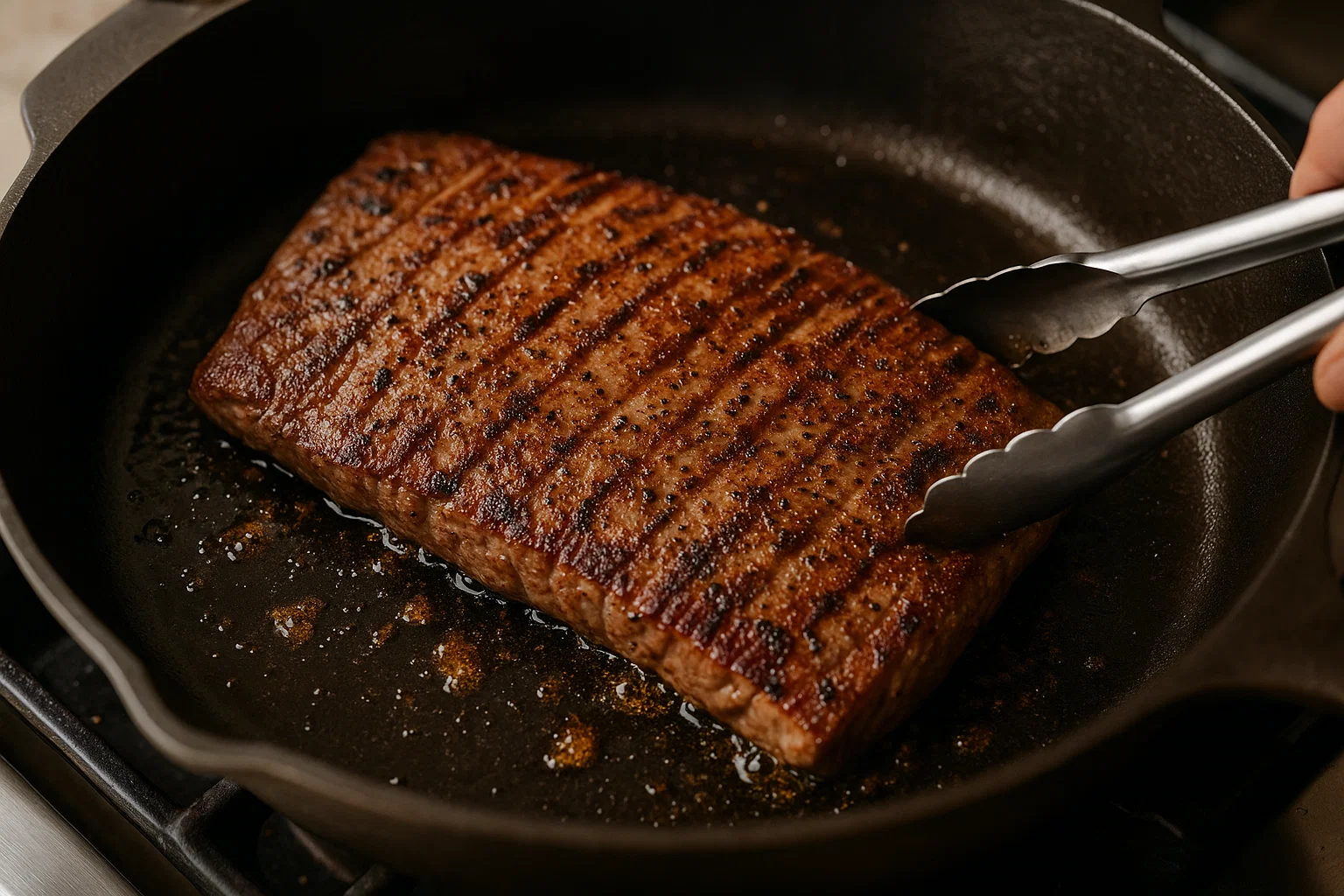
It rains. It snows. Sometimes you just don’t want to go outside. My cast iron skillet has saved dinner more times than I can count. Honestly? It might be better than the grill. A grill gives you grill marks; a skillet gives you an edge-to-edge crust.
Turn your exhaust fan on. Open a window. It’s going to get smoky.
Get the skillet smoking hot. Add a little avocado oil. Lay the steak in away from you so you don’t get splashed with hot grease. Don’t touch it. Let it sear hard.
I love doing this in the winter. The house smells like garlic and beef, and I’m not freezing my hands off. Just watch the heat—sugar burns fast, so if you smell char turning to ash, drop the flame a notch.
How Do You Stop Ruining Dinner by Overcooking?
Flank steak is shaped like a doorstop. Thick in the middle, thin at the end. This is actually a feature, not a bug. The thin end gets well-done for the kids; the middle stays red for the adults.
Get a thermometer.
Stop poking the meat. You aren’t a professional chef, and neither am I. You can’t tell temp by touch. Stick the probe in the thickest part. Pull it at 130°F.
It will keep cooking as it sits, rising to a perfect 135°F. If you let it hit 145°F in the pan, you’re back to eating shoe leather. The fibers tighten up and squeeze all the juice out.
For the science behind why temperature matters so much for bacteria and safety, check the data from the University of Minnesota Extension.
Why is Slicing Against the Grain Non-Negotiable?
You nailed the temp. You rested the meat for ten minutes. Now comes the moment of truth.
Look at the steak. You’ll see lines running the length of the meat. Those are the muscle fibers.
If you cut parallel to those lines, you are serving rope. Your guests will be chewing until next Tuesday. You have to cut perpendicular to the lines. You are manually shortening the muscle fibers so your teeth don’t have to do the work.
I tilt my knife at a 45-degree angle. This gives you wide, thin ribbons of beef. When you do this right, even a slightly tough steak falls apart on the tongue. It is the one rule you cannot break.
What Should You Serve Alongside Your Masterpiece?
The beauty of this marinade is that it fits anywhere. It’s got soy, it’s got lime, it’s got spice.
Tacos: Corn tortillas, cilantro, onion. The charred beef cuts right through creamy guacamole. It’s my Tuesday night go-to.
Steak Salad: Arugula, lemon vinaigrette, parmesan shavings. The beef is heavy; the greens are sharp. It balances perfectly.
The Sandwich: Get a baguette. Toast it. Smear on horseradish mayo. Pile the steak high with some caramelized onions. The juice soaks into the bread and creates something magical.
Why This Method Works Every Single Time
I’ve cooked hundreds of steaks since that first failure. I’ve ruined plenty of other things, but I rarely mess up flank steak.
The system works.
The marinade is your insurance. The heat brings the flavor. The slicing ensures it’s tender. It doesn’t matter if you’re cooking for a date or a backyard full of hungry people.
Go to the butcher. Buy the flank. Don’t be scared of how tough it looks. With a little acid and a lot of fire, you’re about to make the best steak of your life.
FAQs – What is The Best Way to Cook Flank Steak
What is the most effective way to cook flank steak to ensure tenderness and flavor?
The best way to cook flank steak involves three key steps: marinating it in an acidic mixture to tenderize, cooking it quickly over high heat, and slicing against the grain to maximize tenderness.
Why is it important to marinate flank steak with acid, and what ingredients should I use?
Marinating flank steak with acid is crucial because it chemically tenderizes the muscle fibers, making the meat more palatable. Ingredients like lime juice, vinegar, or Worcestershire sauce are effective acids to use in the marinade.
How long should I marinate flank steak for optimal results?
Marinating flank steak for 4 to 8 hours is ideal; longer than that, such as 24 hours, can make the meat mushy. It’s best to marinate in the refrigerator, or at room temperature for about an hour if pressed for time.
What is the proper temperature to cook flank steak to achieve perfect doneness?
Flank steak should be cooked until it reaches an internal temperature of 130°F for medium-rare, as this preserves tenderness and flavor. It’s important to remove it from heat just before it reaches the final temperature, as it will continue to cook slightly while resting.
Why is slicing against the grain essential when serving flank steak, and how should it be done?
Slicing against the grain is essential because it shortens the muscle fibers, making the meat easier to chew. To do this properly, identify the direction of the muscle fibers and cut perpendicular to them at a slight angle for the best results.