You’re standing in the fluorescent glare of the meat aisle, staring at that Styrofoam tray of cube steak. It’s cheap, it looks a little weird with all those mechanical divots pounded into it, and it promises a dinner that won’t wreck your checking account. But we have all been there. You toss it in the cart, take it home, throw it in a hot pan, and twenty minutes later you’re chewing on something that has the texture of an old catchal mitt. It’s frustrating.
I remember the first time I tried to cook this stuff. I was nineteen, broke, and trying to impress a date in my college apartment. I bought cube steak because the price tag looked friendly, and I thought “steak is steak,” right? Wrong. I seared it hard with zero prep. It curled up like a potato chip and got tough as nails. I watched her politely try to saw through it for five minutes before we both gave up and ordered a pizza. It was humiliating.
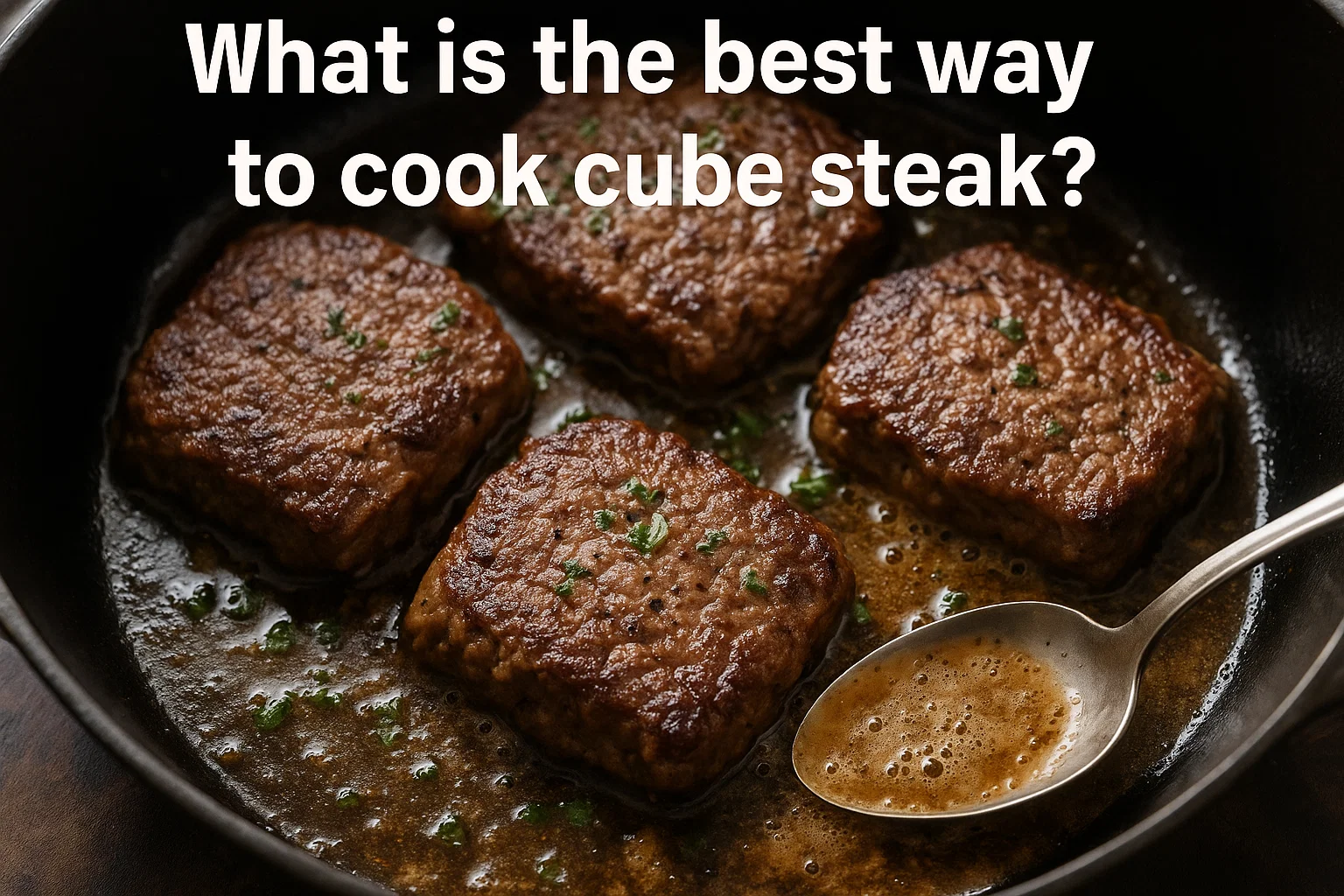
But here is the honest truth I learned years later. That tough, bargain-bin cut of beef can actually transform into the most tender, melt-in-your-mouth comfort food you have ever put a fork to. You just have to stop treating it like a ribeye. So, what is the best way to cook cube steak? Without a shadow of a doubt, it is the Country Fried way. I’m talking about a jagged, golden-brown crust, a tender interior that falls apart, and a peppery white gravy made right in the same skillet. Forget the sous-vide. We are doing this the old-school way.
More in Beef & Red Meat Category
What is The Best Way to Cook Sirloin Steak
What is The Best Way to Cook a Tomahawk Steak
Key Takeaways
- The Buttermilk Soak is Mandatory: You can’t skip this. The acidity and calcium in buttermilk wake up the enzymes in the meat, breaking down the fibers that make your jaw ache.
- Don’t Fear the Double Dip: One pass through the flour isn’t enough. You need a dry-wet-dry coating to create a crust that actually stays on the steak.
- Watch Your Heat: If your oil is too cold, you get grease sponges. If it’s too hot, you burn the outside while the inside stays raw.
- Save the Drippings: That brown stuff stuck to the bottom of your cast iron? That’s not trash; that’s the foundation of your gravy.
- Cast Iron Wins: You need a heavy pan that holds heat. Thin non-stick pans just can’t handle the temperature drop when the meat hits the oil.
Why does everyone seem to struggle with cube steak?
Cube steak gets a bad rap. People call it “mystery meat” or “scrap,” but that’s just ignorance talking. Cube steak is usually top round or top sirloin—decent cuts of meat—that the butcher has run through a mechanical tenderizer. That machine is what gives it that “cubed” look. It physically severs the long muscle fibers so you don’t have to chew as hard.
I have a real soft spot for this cut. Growing up, my dad worked long shifts at a manufacturing plant, and money was often tight. My mom didn’t buy cube steak because it was trendy; she bought it because it was fuel for three growing boys. But she understood the meat. She knew that round steak is lean. It has almost no internal fat to baste it as it cooks. If you grill it, it dries out instantly. You have to add fat and protection. That is where the Country Fried method is genius. It wraps the meat in a batter, essentially steaming the beef inside its own juices while the outside gets that satisfying crunch. It’s kitchen alchemy.
Is “Country Fried” genuinely the only way to cook it?
You might be wondering if you can just sauté it with onions or maybe braise it in a slow cooker with mushroom soup. Sure, you can. I’ve eaten plenty of “Salisbury Steak” style dinners where the meat was simmered until it surrendered. They are fine. But if we are really asking what is the best way to cook cube steak, we are looking for the method that maximizes flavor while completely hiding the cut’s humble origins.
Pan-searing without breading usually results in a dry, grey piece of meat. Braising works for tenderness, but you lose the texture contrast. Country frying hits the bullseye. You get the crunch. You get the tender meat. You get the fatty richness of the gravy. It solves every single problem inherent to the cut. The breading acts as an insulator, moderating the intense heat so the proteins don’t seize up tight. Plus, let’s be real for a second: fried beef covered in cream gravy is just good for the soul.
How do you prep the meat to guarantee tenderness?
Do not just rip open the plastic and dump the meat into flour. You have to show the meat some patience first. This was the mistake I made on that disastrous date. I treated it like fast food.
Does soaking it in buttermilk actually make a difference?
Yes. A huge difference. Buttermilk is slightly acidic and contains calcium, which triggers enzymes in the meat to start breaking down proteins. It’s a chemical tenderizer that finishes the job the butcher’s machine started.
I grab a glass bowl—don’t use metal, as it can sometimes react with the acid—and submerge the steaks in buttermilk. I usually toss in a few dashes of hot sauce right there in the soak. It doesn’t make the steak spicy, but it helps penetrate the meat with flavor. Let it sit in the fridge. An hour is the minimum, but if you can leave it while you go watch a movie or do some yard work for three or four hours, that’s even better. When I finally started doing this, the difference was night and day. The fork just glided through the meat.
What is the trick to keeping the breading from falling off?
We have all been served that sad piece of chicken or steak where the breading slides off in one soggy sheet like a wet blanket. It’s heartbreaking. You want the crust to fuse with the steak. This requires a tactile approach. You have to get your hands dirty.
I set up a station. Left to right.
- Seasoned Flour: This is your base.
- The Binder: Eggs beaten with a little milk or buttermilk.
- Seasoned Flour again: The final coat.
Here is the secret I swear by: Press the flour in. Don’t just roll the meat around and shake it off. Take the heel of your hand and physically press that flour into the nooks and crannies of the cube steak. You want it embedded. Then—and this is the part everyone skips—put the breaded steaks on a wire rack and walk away.
Let them sit for 15 minutes. This allows the gluten in the flour to absorb the moisture from the egg wash, creating a glue. If you throw them straight into the hot oil, the moisture expands too fast and blows the crust right off the meat. Give it a minute. Drink a beer. Let the chemistry happen.
Should you use a deep fryer or a skillet?
I’ve had arguments with buddies over this at tailgates. Some guys love the deep fryer because it cooks evenly. But for Country Fried Steak, you want the shallow pan-fry method. You want the steak to physically touch the bottom of the cast iron. This creates a harder, darker sear than floating in oil ever could.
I use a 12-inch cast-iron skillet that I’ve had for fifteen years. It’s seasoned black and holds heat like a champion. When you drop a cold steak into a pan, the temperature plummets. A thin aluminum pan loses too much heat, and your steak ends up steaming in grease rather than frying. Cast iron stays hot.
Pour in enough oil to come halfway up the side of the steak. I use peanut oil or vegetable oil. You want that oil shimmering, around 350°F. If you don’t have a thermometer, do the old grandma trick: flick a little flour into the oil. If it sizzles immediately, you’re good. If it just sinks, wait. If it smokes, you went too far.
How do you know when to flip without burning it?
This is where you need some finesse. Cube steak is thin. It cooks fast. If you cook it until you think it’s well done, you have actually made beef jerky.
Cook it for about 3 to 4 minutes per side. You are looking for a deep, dark golden brown. Golden brown equals flavor. That’s the Maillard reaction. Don’t flip it more than once. Flipping it constantly knocks the breading loose and cools the pan down. Trust the process. I usually watch the edges. When I see the brown color creeping up the side of the meat and the blood starting to pool slightly on top, I know it’s time to flip.
Once they are done, move them to a wire rack. Do not stack them on a plate! If you stack them, the steam from the bottom steak will turn the top steak’s crust into mush. Give them room to breathe.
Also read: What is The Best Way to Cook Beef Brisket
How do you make gravy that isn’t paste?
This is the holy grail. The steak is just the vehicle; the gravy is the destination. You cannot serve this dish dry. And please, do not reach for a packet. You have all the flavor you need right there in the skillet.
After you fry the steaks, you have oil left in the pan, along with little crispy bits of batter (the fond). That is pure flavor. Pour off most of the grease, but keep about a quarter cup in the pan with the drippings.
The Roux: Keep the heat on medium-low. Sprinkle an equal amount of flour (about a quarter cup) into the hot grease. Whisk it constantly. You want to cook the raw taste out of the flour. Let it bubble and turn the color of peanut butter.
The Liquid: Slowly pour in whole milk. I emphasize slowly. Pour a splash, whisk like crazy. Pour another splash, whisk again. If you dump it all in at once, you get lumps. I remember watching my dad make gravy on Sunday mornings. He had a rhythm to it. Pour, whisk, pause. Pour, whisk, pause.
Bring it to a gentle bubble. It will thicken as it heats up. If it feels like cement, add a splash more milk.
The Seasoning: The gravy needs plenty of black pepper. I mean plenty. It should look speckled grey. Add salt to taste. Taste it as you go. It should be savory, creamy, and have a kick of pepper at the end.
What if the steak is still tough after frying?
Let’s say you messed up. Maybe you rushed the soak, or maybe the cow was just an old athlete. You pull a steak out, cut into it, and it’s tough. Is dinner ruined? Not necessarily.
This is where the “smothered” technique saves the day. You can take your fried steaks and slide them back into that gravy you just made. Put a lid on the skillet and turn the heat down to low. Let them simmer in the gravy for 20 minutes. The moisture from the gravy will soften the crust (you lose the crunch, sadly) but it steams the meat, breaking down those tough fibers further. It turns into a different dish—Smothered Steak—but it saves the meal. I’ve had to do this a few times when I got distracted by a football game and let the steaks fry too hard. The guys never complained once.
Which spices actually wake up the flavor?
Salt and pepper are the baseline, but to really make this sing, you need depth. I make a custom blend for my flour dredge.
- Smoked Paprika: This gives it a subtle wood-smoke flavor and a beautiful reddish-brown color.
- Garlic Powder & Onion Powder: These are the savory workhorses.
- Cayenne Pepper: Just a pinch. You don’t want it “hot” like wings, but you want a low hum of heat at the back of your throat to cut through the heavy richness of the gravy.
I mix this into the flour and I sprinkle a little directly on the raw meat before dredging. Layering the flavor is key. If you only season the flour, the meat inside tastes bland. If you only season the meat, the crust tastes like raw flour. You need both.
What should you serve with it?
You have put all this effort into the main course; don’t slack on the sides. Country Fried Steak is heavy. It’s rich. You need sides that can stand up to that weight.
Mashed potatoes are non-negotiable. You need a starch to catch that extra gravy. I like to leave the skins on my red potatoes for a bit of texture. Plenty of butter, a splash of cream.
For a vegetable, green beans are the classic partner. I like to sauté them in the skillet before I start the steak, maybe with a little bacon grease and onions. The brightness of the green beans cuts through the heavy, fried nature of the steak. Collard greens are another solid choice if you want to lean fully into the Southern vibe. And if you really want to go all out, a flaky biscuit on the side doesn’t hurt anyone.
Is this a weeknight meal or a Sunday dinner?
Cube steak is cheap enough for a Tuesday but good enough for a Sunday. That’s the beauty of it. It feels like a feast. I make this when I have friends coming over to watch the game because it’s scalable. You can fry up eight of these in batches, keep them warm in the oven at 200°F, and make a massive pot of gravy.
It’s comfort food. It signals to people that you care enough to stand by the stove and fry something by hand. It’s not a 30-minute sheet pan meal. It requires presence. But that effort pays off when you see people wiping their plates clean with that last piece of biscuit.
Common pitfalls that ruin the dish
I’ve made every mistake in the book, so you don’t have to.
- Overcrowding the pan: If you jam four steaks in at once, the temperature crashes. The breading absorbs the oil instead of frying in it. Cook in batches. Two at a time works best.
- Using cold milk for gravy: It’s not a crime, but room-temperature milk incorporates smoother than ice-cold milk from the fridge.
- Skimping on the oil: This isn’t a sauté. You are shallow frying. You need enough oil to surround the bottom half of the steak.
The Verdict
When you look at the options, nothing really competes with the Country Fried method for cube steak. Grilling it turns it to leather. Stewing it takes hours. But battering and frying it? That transforms a humble, working-class cut of beef into a king’s dinner.
The contrast between the crispy, seasoned crust and the tenderized beef inside is a texture lover’s dream. The peppery white gravy ties it all together, adding moisture and richness. It honors the ingredients. It takes something tough and makes it tender. It takes something simple and makes it complex.
Next time you see those cube steaks on sale, don’t walk past them. Grab a pack. Buy a quart of buttermilk. Dust off that cast iron skillet. You are about to make the best meal of your week.
For more information on safe internal cooking temperatures for beef, check out this guide from the USDA Food Safety and Inspection Service.
FAQs – What is the best way to cook cube steak
Why is soaking cube steak in buttermilk important?
Soaking cube steak in buttermilk is crucial because the acidity and calcium in the buttermilk help to tenderize the meat by breaking down its fibers, resulting in a more tender and flavorful steak.
How can I prevent the breading from falling off the steak?
To keep the breading from falling off, press the seasoned flour firmly into the meat, then let the breaded steak sit on a wire rack for at least 15 minutes before frying, allowing the flour to form a gluey coating.
Should I use a deep fryer or a skillet for frying cube steak?
For cube steak, a shallow cast iron skillet is preferred because it allows the meat to touch the bottom and develop a better sear, providing a crispier crust compared to deep frying.
How can I tell when to flip the cube steak while frying?
Flip the cube steak after about 3 to 4 minutes when it has developed a deep, golden brown color and the edges show signs of browning, indicating it is cooked enough on that side without being burned.