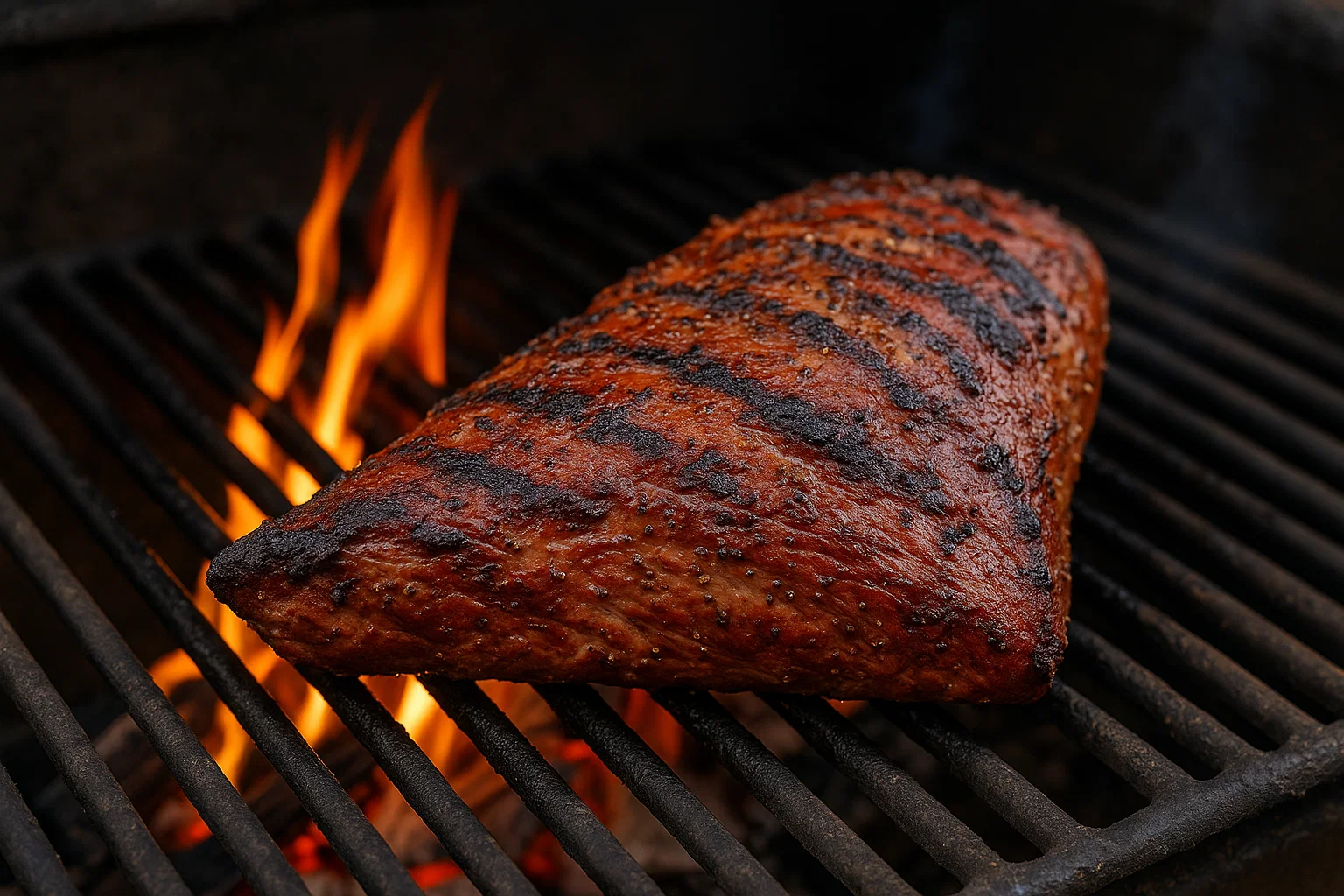
If you grew up on the Central Coast of California like I did, you didn’t eat brisket. You didn’t eat pulled pork. You ate tri-tip. It was the religion of the Santa Maria Valley. Sunday afternoons weren’t complete without the smell of red oak smoke drifting over the fence and the sound of fat dripping onto hot coals. But let’s get real for a second. Life happens. You move to an apartment with strict fire codes. Winter hits hard. Or maybe you just don’t feel like babysitting a charcoal chimney for an hour. I used to be a purist. I thought putting this sacred cut of beef in the oven was a crime against humanity.
I was wrong.
After ruining more than a few roasts and setting off my smoke alarm enough times to make the neighbors worry, I figured it out. You can actually get a better, more consistent steak indoors. No wind to fight. No flare-ups scorching your eyebrows. Just precise heat control. So, what is the best way to cook a tri tip when you want that perfect edge-to-edge medium-rare without the hassle of live fire? It comes down to a hybrid method: a violent sear in cast iron followed by a gentle finish in the oven. It’s a technique that prioritizes texture and crust above all else.
More in Beef & Red Meat Category
What is The Best Way to Cook Prime Rib
What is The Best Way to Cook Brisket
Key Takeaways
- Cast Iron is King: You need heavy metal to hold heat; flimsy non-stick pans will ruin the crust.
- The Grain Changes: This is the only steak that tricks you; the grain shifts direction halfway through.
- Thermometers Don’t Lie: The “touch test” is a myth; use digital tools to pull the meat at 130°F.
- Patience Pays Off: Resting the meat is actually part of the cooking process, not just a suggestion.
- Keep It Simple: Salt, pepper, and garlic beat fancy marinades every single time.
Why Would a Die-Hard Griller Choose the Oven?
I have a vivid memory of a specific Fourth of July that changed my mind forever. I had ten hungry people coming over. I’d spent fifty bucks on a Prime tri-tip from Costco—the kind with marbling that looked like a snowy topographic map. I had the grill prepped. I was ready to be the hero.
Then the sky turned black.
It wasn’t just rain; it was a deluge. My backyard turned into a mud pit in minutes. I stood there staring at my flooded patio, holding this beautiful slab of beef, feeling absolute defeat. I couldn’t grill. The party was happening in an hour. I had to pivot.
I dragged the operation into the kitchen. I was terrified the meat would taste like a pot roast—steamed, gray, and lifeless. But I treated the stove like a grill and the oven like a smoker. The result shocked me. The meat cooked evenly. I didn’t have that common grilling problem where the tapered end is burnt to a crisp while the thick center is raw. The oven provided a steady, wrapping heat that charcoal sometimes struggles to match. That rainy afternoon saved the party, and honestly? It was the best steak I had cooked all year. That was the day I stopped being a snob and started respecting the oven.
What is This Oddly Shaped Cut of Beef Anyway?
Butchers refer to it as the tensor fasciae latae muscle, but that sounds like something you tear at the gym. It sits at the bottom of the sirloin primal. Think of it as a boomerang of muscle fibers. Because it supports the cow’s leg movements, it’s lean. It works hard.
That work ethic translates to deep, beefy flavor, but it also means it has zero tolerance for error. A ribeye has chunks of internal fat that melt and baste the meat from the inside. If you overcook a ribeye, it’s still edible. Tri-tip is unforgiving. It’s lean muscle. If you take it past medium, you are serving your guests an expensive leather boot. There is no coming back from well-done here.
The shape creates its own drama. You have a thick end (the head) and a thin, tapered end (the tail). On a grill, the tail often burns. In an oven, however, we can manipulate the heat distribution. You actually get a nice variety of doneness naturally—the tail ends up medium for the people who prefer that (we all know one), while the thick center stays a glorious, bloody medium-rare.
How Do You Select the Right Roast at the Store?
Not all cows are created equal. When you stand at the meat counter, don’t just grab the first package you see. You need to look for specific traits.
First, ignore the word “Select.” If the grade is Select, walk away. It’s too lean for this cooking method. You want Choice at a minimum, but Prime is the sweet spot. The price difference is usually only a dollar or two per pound, but the difference in texture is astronomical.
Look for white flecks of fat inside the red muscle. That’s marbling. External fat can be trimmed; internal fat is flavor. Also, check the thickness. Try to find a roast that looks relatively uniform. Some butchers hack these things up, leaving one end three inches thick and the other paper-thin. Avoid those deformities. You want a consistent, thick block of protein.
How Should You Prep and Trim for the Best Crust?
Preparation starts with surgery. Unwrap the meat and look at the fat cap. Some old-school guys scream, “Leave the fat! It bastes the meat!”
I disagree.
In a smoker running for six hours, sure, that fat might render. In a 400-degree oven for 25 minutes? No way. That fat cap will just turn into a gummy, white layer of grease that nobody wants to eat. I take a sharp boning knife and trim that cap down to less than an eighth of an inch. You want just enough to protect the meat, not a layer of blubber.
Next, hunt for the silver skin. This is a shiny, pearlescent membrane that sits on the meat. It does not melt. It tightens up like a rubber band when heat hits it, squeezing the meat and making it tough. Slide your knife under it and peel it off. Be ruthless.
For seasoning, put the bottle of sugary BBQ rub away. Sugar burns in a hot skillet. You want savory. I stick to the California Holy Trinity:
- Kosher Salt: Use more than you think you need. It draws out moisture to help the crust form.
- Coarse Black Pepper: You want the crunch.
- Granulated Garlic: Not fresh garlic (it burns) and not garlic salt (too salty).
Press the rub into the meat. Don’t just sprinkle it like fairy dust. Massage it in. If you have time, throw the seasoned meat in the fridge uncovered for four hours. This “dry brines” the steak, drying out the surface so you get a better sear later.
Why is the Sear Non-Negotiable?
This is the step where most people fail because they are afraid of heat. They gently place the meat in a lukewarm pan.
Don’t do that.
You need violence. You need heat. The goal is the Maillard reaction—that chemical bonding of amino acids and sugars that creates the brown crust. That crust is where 90% of the flavor lives. If you skip this and just bake the meat, you get gray, sad beef.
Open your windows. Turn on the exhaust fan. Disable the smoke detector for twenty minutes. Grab your heaviest cast-iron skillet. Heat it on high until you see wisps of smoke rising from the dry pan. Add an oil with a high smoke point—avocado oil or grapeseed oil work best. Olive oil will burn and taste bitter.
Lay the steak down. It should scream at you. Do not touch it. Let it ride. You want a hard, dark mahogany crust, which takes about three to four minutes per side. Don’t forget the edges. Use tongs to hold the roast vertically and sear those thick sides. You want the entire surface area to look like a meteor.
What is the Strategy for the Oven Roast?
Once your kitchen is hazy and the steak looks like it’s been through a war, it’s time for the gentle part. Transfer the skillet directly into a preheated oven.
I set mine to 400°F (200°C).
Why so high? Some recipes tell you to go low and slow at 250°F. That works great for a reverse sear, but since we already seared the meat hard, we want to carry that momentum through. A 400-degree oven powers through the cooking process quickly, preventing the meat from sweating out its juices.
If your skillet isn’t oven-safe (plastic handles are a no-go), transfer the meat to a wire rack set over a baking sheet. Actually, the wire rack is a pro move anyway. It allows hot air to circulate under the meat, ensuring the bottom crust doesn’t get soggy in the rendered fat.
How Do You Know When to Pull It Out?
Throw away the clock. Cooking by time is a fool’s game. Your oven is different from mine. Your roast is a different thickness. The only truth teller is a digital instant-read thermometer.
According to research from Texas A&M University’s Department of Animal Science, internal temperature is the only reliable metric for meat safety and quality. You cannot guess this.
Insert the probe into the absolute thickest part of the roast.
- 125°F: Rare. Cool, red center.
- 132°F: The Sweet Spot. Medium-Rare.
- 140°F: Medium. Starting to firm up.
I pull my tri-tip at exactly 132°F.
Here is the kicker: Carryover Cooking. The heat doesn’t just stop when you open the oven door. The thermal momentum continues to push the internal temperature up by another 5 to 8 degrees while it sits on the counter. If you pull it at 135°F, it will rest up to 142°F, and suddenly you’ve overcooked it. Always aim lower than your target.
Why is the Rest Period the Hardest Part?
This requires willpower. You pull that sizzling, garlic-scented roast out of the oven. You are hungry. It looks perfect. You want to cut it immediately.
Stop.
If you cut into that meat right now, you ruin it. While the meat cooks, the muscle fibers contract and squeeze moisture toward the center of the roast. It’s under high pressure. If you slice it now, that pressure releases, and all the juice spills out onto the cutting board. You end up with a pool of liquid on the wood and dry meat on the fork.
Let it rest. Tent it loosely with foil—don’t wrap it tight or you’ll steam the crust soft. Just a loose cover. Set a timer for 15 minutes. Go wash the skillet. Pour a glass of wine. Do anything but touch that knife. During this time, the fibers relax and reabsorb the juices, ensuring every slice is moist.
How Do You Solve the Geometry Puzzle of Slicing?
Slicing tri-tip incorrectly is the number one reason people think it’s a tough cut of meat. You can cook it perfectly and still ruin it with the knife.
Meat is made of long strands of muscle fiber. If you cut parallel to them, you leave long strands intact. Your teeth have to do the work of breaking those strands. It feels chewy. If you cut across the grain (perpendicular), you snap those strands into tiny pieces. The meat falls apart in your mouth.
Tri-tip is tricky because the grain changes direction. It runs one way on the thick side and shifts about 45 degrees on the thin side.
- Find the intersection where the grain shifts.
- Cut the roast in half right there. Now you have two pieces.
- Rotate each piece so you are cutting against the lines.
- Slice thin. Bias cuts (angling the knife) help make the slices wider and even more tender.
What Should You Serve with It?
Since the oven is already hot, don’t overthink the sides. I like to toss a tray of broccoli or asparagus in with the beef. Just olive oil, salt, and lemon. They roast in about the same time the meat rests.
If you want to lean into the California roots, you need beans. Pinquito beans are traditional, but a good doctored-up can of black beans with bacon and onions works in a pinch. Garlic bread is non-negotiable in my house. You need something to mop up the juices on the plate.
For drinks? This is a bold, salty, peppery steak. You need a drink that can fight back. A heavy Cabernet Sauvignon or a Zinfandel works perfectly. If you’re a beer guy, go for a West Coast IPA. The bitterness cuts right through the beef fat.
What About the Leftovers?
Leftover tri-tip is almost better than the fresh meal, provided you don’t nuke it. The microwave destroys steak. It vibrates the water molecules and steams the meat from the inside out, turning it gray and rubbery.
Eat it cold. Thinly slice the cold steak and pile it on a French roll with sharp cheddar, arugula, and a spicy horseradish mayo. Or, chop it into cubes and throw it into a hot skillet with potatoes and onions for a breakfast hash. The seared crust adds a smoky depth to eggs that bacon just can’t match.
Final Thoughts from the Kitchen
Cooking a world-class steak doesn’t require a backyard, good weather, or a fancy grill. It requires understanding the meat. When people ask what is the best way to cook a tri tip, they usually expect a secret marinade or a complex gadget. The truth is simpler. It’s heat control. It’s a hot pan, a hot oven, and the patience to let the meat rest.
I still love grilling. There is something primal about fire. But on a rainy Tuesday, or a lazy Sunday, the oven method wins. It’s cleaner, it’s faster, and the results are undeniable. So next time you see that triangular roast at the grocery store, grab it. Don’t worry about the forecast. Just grab your cast iron and get to work.
FAQs – What is The Best Way to Cook a Tri Tip
What is the most reliable method to determine when a tri-tip is cooked perfectly?
The most reliable method is to use a digital instant-read thermometer to check the internal temperature, pulling the meat when it reaches about 132°F for medium-rare, and accounting for carryover cooking.
Why is the searing step considered non-negotiable when cooking tri-tip?
Searing is essential because it creates the Maillard reaction, which forms a flavorful crust; skipping this step results in dull, gray beef and less flavor.
How should I prepare and trim the tri-tip for optimal crust and flavor?
Remove excess fat and silver skin with a sharp knife, then season generously with kosher salt, coarse black pepper, and granulated garlic, massaging the rub into the meat and letting it rest in the fridge if possible.
What is the best way to slice tri-tip to ensure tenderness?
Slice against the grain, especially at the point where the grain shifts direction, to break up the muscle fibers and make the meat more tender for each bite.
What are recommended side dishes and drinks to serve with tri-tip?
Roasted vegetables like broccoli or asparagus, beans, garlic bread, and hearty drinks such as Cabernet Sauvignon or West Coast IPA complement the rich flavors of tri-tip.