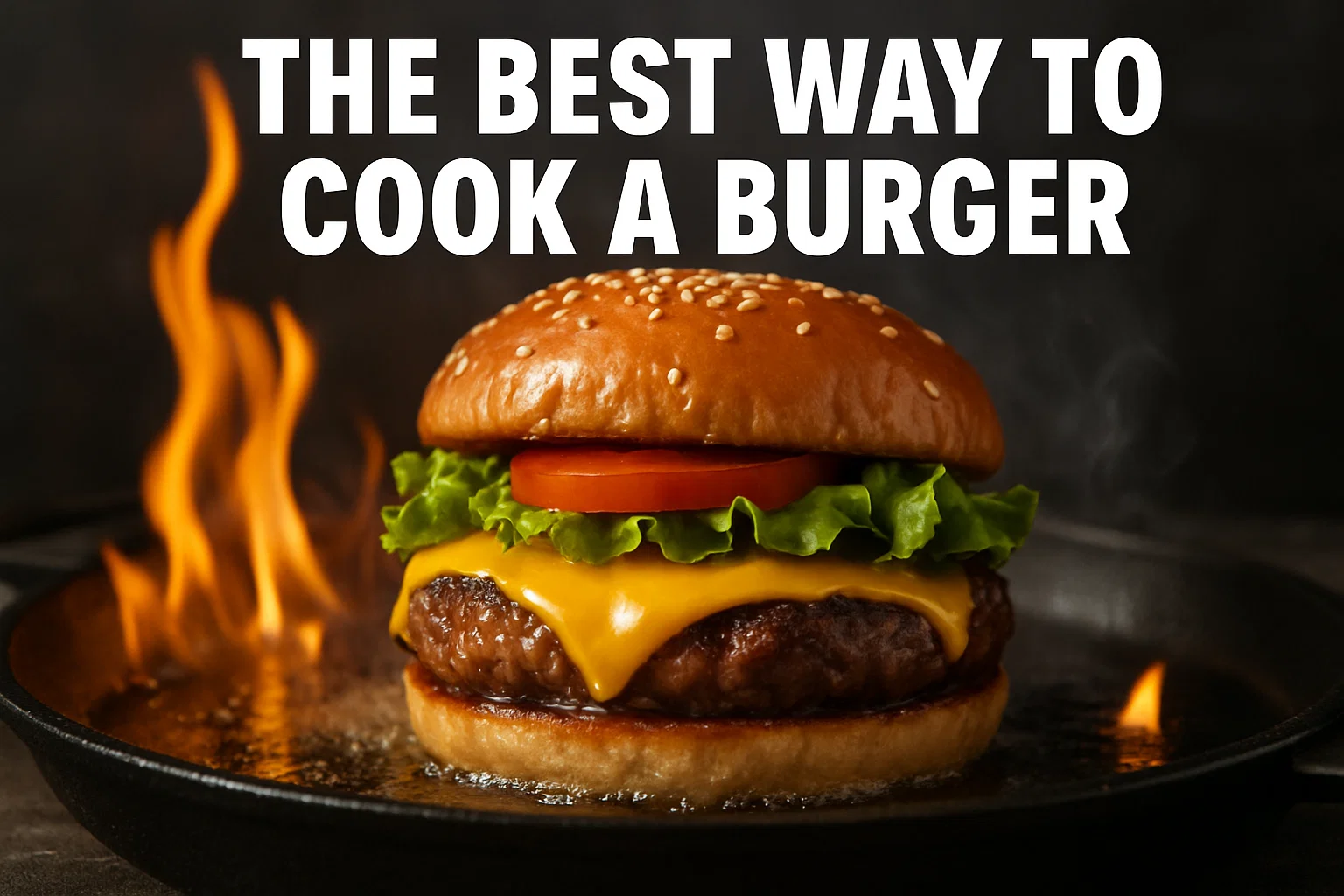
I still remember the absolute worst burger of my life. It was the summer of ’98, a scorching July afternoon that felt like the sun was sitting right on our shoulders. My uncle, bless his heart, had invited the whole family over for a massive 4th of July blowout. He was beaming with pride over his new gas grill, a stainless steel behemoth gleaming like a spaceship in the backyard. We all stood around holding warm sodas, watching him work. He pressed down on those poor patties with a metal spatula like he was trying to kill a spider.
He flipped them every thirty seconds. He poked them. He prodded them. By the time he finally handed me a paper plate, the thing sitting on the bun looked less like food and more like a charred hockey puck found in a fire pit. I took one bite, and it crumbled into dry, gray dust in my mouth. I had to chug half a can of cola just to get it down.
That specific culinary trauma set me on a lifelong quest. I needed to know, truly, what is the best way to cook a burger? Not just a passable burger, but the kind that drips down your chin, makes you close your eyes in involuntary delight, and effectively ruins you for all fast-food joints forever. It turns out, the secret isn’t in a fancy gadget, a secret menu item, or an expensive spice rub made from rare peppers. It’s in the technique. It’s about respecting the meat, mastering the fire, and understanding the simple physics of cooking.
More in Beef & Red Meat Category
What is The Best Way to Cook Beef Short Ribs
What is The Best Way to Cook Flank Steak
Key Takeaways
- Fat is Flavor: Lean meat is the enemy of a good burger; stick to the 80/20 ratio (chuck) for the perfect balance of moisture and flavor.
- Handle with Care: Treat the meat like it’s fragile. Overworking it creates a dense, rubbery texture that ruins the mouthfeel.
- The Thumb Press: A simple indentation in the center of the raw patty prevents the “meatball effect” and ensures even cooking.
- High Heat is Essential: You need screaming hot grates to trigger the Maillard reaction, creating that crave-worthy dark crust.
- Flip Once (Mostly): Patience is an ingredient. Let the crust form, flip it once, and stop messing with it.
- Use a Thermometer: Cooking by time is a guessing game. Cooking to temperature guarantees safety and your preferred doneness.
Why do most backyard cookouts end in culinary tragedy?
We need to be brutally honest with ourselves for a minute. Most home-cooked burgers are bad. They are dry, tough, bland, or strangely shaped. Why does this happen? Usually, it comes down to fear. People are terrified of undercooking the meat, so they nuke it until it’s gray all the way through. Or they are afraid the burger will fall apart on the grill, so they mash the meat together until it’s a dense brick that bounces when you drop it.
I used to make these exact same mistakes. When I first started grilling in college, I bought the leanest beef I could find—that 93% lean stuff—because I thought I was being healthy. Then, to make up for the lack of flavor, I’d mix in diced onions, bell peppers, raw eggs, and breadcrumbs. I wasn’t making a burger; I was making a flat, sad meatloaf. The result was always disappointing. A real burger doesn’t need to hide behind fillers or binders. It needs fat, heat, and salt. That’s it. If you start with those three pillars, you are already ahead of 90% of the population. The magic lies in simplicity, but simplicity requires precision.
Is your butcher hiding the secret to the perfect patty?
You walk into the grocery store, and the massive wall of red meat stares back at you. It’s overwhelming. You see 90/10, 85/15, Ground Sirloin, Ground Round, Ground Chuck. If you reach for that package of 93% lean ground beef, put it back immediately. Step away from the lean meat and nobody gets hurt.
Fat is not the enemy here; fat is the vehicle for flavor and moisture. When that fat renders on the grill, it bastes the meat from the inside out, keeping it juicy even as the proteins contract and squeeze out water. If you start with lean meat, you have no insurance policy against the intense, searing heat of the grill. You have no margin for error.
Stick to Ground Chuck with an 80/20 ratio (80% lean meat, 20% fat). This is the holy grail of burger ratios. Chuck comes from the shoulder of the cow, a hardworking muscle that is loaded with beefy flavor, but it also has enough intermuscular fat to keep things moist. I once tried to get fancy and grind my own custom blend of brisket and short rib. It was delicious, sure, but it took three hours, clogged my grinder, and created a mountain of dishes. For a Tuesday night dinner or a Sunday tailgate, 80/20 chuck from a reputable butcher is all you need.
If you can get it freshly ground that day, you are golden. The pre-packaged “tubes” of meat you see in the freezer section are compressed and dense before you even touch them. Go for the Styrofoam tray where the meat looks like squiggly worms—that means it’s loose, airy, and ready to be shaped into something magnificent.
Does the temperature of the meat matter before it hits the grill?
This is a massive point of contention in the BBQ world. Some chefs swear by letting steaks come to room temperature before cooking to ensure an even cook. But for burgers? Keep that meat cold. Keep it in the fridge until the very last second.
Here is why this matters: You want the fat to stay solid until it hits the flames. If your fat starts melting in your hands while you form the patties because the meat is room temp, that fat winds up greasing your palms instead of basting your burger. I keep my ground beef in the fridge until the moment I’m ready to form patties. Once they are formed, if the grill isn’t quite ready, I put them right back in the fridge. Cold fat creates pockets of juice within the burger structure. Warm, smeared fat creates a greasy, leaking mess. You want the fat to liquefy inside the burger while it cooks, not on your cutting board.
Should you really smash that meat or treat it like a delicate flower?
Watch a professional chef or a seasoned pitmaster make a burger. They don’t knead the meat like they are making pizza dough. They handle it as if it’s a fragile antique vase.
Grab a chunk of that cold beef. Gently shape it into a round. Do not pack it tight. You want the strands of meat to just barely hold together. This loose structure creates tiny internal pockets where juices can collect and steam the meat from the inside. If you pack it tight, you squeeze out those pockets, and you end up with a dense, rubbery texture that feels like chewing on a tire.
I usually aim for patties that are about 6 ounces each. That’s a substantial burger—a quarter-pounder feels a bit skimpy once it shrinks. Make them slightly wider than your buns because they will inevitably shrink and pull in as they cook. There is nothing sadder than a tiny puck of meat lost in a cavernous bun.
What is the deal with the thumbprint trick?
You have probably seen this tip in cookbooks or on cooking shows, but do you actually do it? It’s not an old wives’ tale; it’s physics. When meat cooks, the proteins contract and tighten up like a clenched fist. This action cinches the burger, forcing the center to bulge upward. You end up with a meat-tennis-ball that rolls around on the bun and pushes all your toppings off.
To fix this, use your thumb or the back of a tablespoon to create a shallow, wide dimple in the exact center of the raw patty. It should look like a donut that didn’t quite make it all the way through. As the burger cooks and tightens, that dimple fills in, and you end up with a perfectly flat surface for your cheese, tomato, and bacon. It works every single time, and it makes your burger look professional.
Does salt actually ruin your beef before it hits the heat?
I learned this lesson the hard way during a botched dinner date in my mid-20s. I was trying to impress a girl who loved burgers. I bought expensive beef, and I mixed salt, pepper, and onion powder right into the ground meat about an hour before grilling, thinking I was letting the flavor “marinate” and penetrate the meat. By the time we sat down to eat, the texture was weirdly springy, almost like a hot dog or a sausage. It wasn’t crumbly and tender like a burger should be.
Salt dissolves muscle proteins. If you mix salt into the ground beef, or if you salt the outside too early, you change the protein structure of the meat. You are essentially curing it, turning it into sausage.
Here is the golden rule: Salt the outside, and only do it right before you grill.
Generously coat the exterior with Kosher salt and freshly cracked black pepper just seconds before you slap them on the grates. This creates a savory, salty crust without altering the internal texture of the beef. Keep the seasoning simple. Maybe a little garlic powder or onion powder if you’re feeling wild, but great beef doesn’t need a complex rub. The smoke and the fat provide the flavor profile you want.
Charcoal vs. Gas: Which flame reigns supreme for flavor?
We could argue about this until the sun burns out. I own both. I love both. But they are different beasts for different days.
Gas is convenient. You turn a knob, press a button, and you are cooking in ten minutes. It gives you precise temperature control. If you are cooking on a Tuesday after work and you’re tired, gas is a lifesaver. It gets the job done cleanly and efficiently.
But if you ask me what is the best way to cook a burger for maximum flavor? It has to be charcoal. There is no contest.
There is something primal about the smoke. When dripping fat hits the white-hot coals, it vaporizes instantly and floats back up into the meat as flavor molecules. You just cannot replicate that distinct, smoky char on a gas grill. The “flavorizer bars” on gas grills try to mimic this, but they fall short.
I remember buying my first kettle grill at a garage sale for twenty bucks. It was rusted, wobbly, and one leg was shorter than the others. The first time I lit a chimney of charcoal and smelled that burning oak, I knew I was in for something different. The burger I pulled off that rickety grate had a depth of flavor that tasted like summer memories and camping trips. If you have the time, light the charcoal. Use a chimney starter—ditch the lighter fluid, which makes your food taste like chemicals—and let the coals get covered in gray ash before you dump them.
How hot is too hot when you want that crust?
You want your grill screaming hot. We are talking about two-zone cooking here, but the primary action happens over direct heat.
Set your grill up with a hot zone (direct heat) and a cool zone (no heat). If you are using gas, turn half the burners to high and leave the others off. If you are using charcoal, pile the red-hot coals on one side of the kettle.
You need high heat—450°F to 500°F—to trigger the Maillard reaction. This is the chemical reaction between amino acids and reducing sugars that gives browned food its distinctive flavor. It’s what turns gray meat into brown, crusty deliciousness. Without high heat, you just have gray, steamed meat, which is unappealing to look at and boring to eat.
Clean your grates thoroughly. A dirty grate leads to sticking. Once clean, oil the grates with a paper towel dipped in vegetable oil (use tongs, please, don’t burn your hand like I did that one time trying to be a hero). When the oil smokes, you are ready to drop the hammer.
The Flip: Are you flipping out too much?
Place the patties on the hot side of the grill. Listen to that sizzle. That is the sound of success. Now, do the hardest thing in the world: Do nothing.
Walk away. Drink a sip of your beer. Talk to your guests. Do not touch that meat.
If you try to flip it too early, it will stick to the grates and tear apart, leaving half your burger fused to the metal. You need the crust to form and release naturally. Depending on your heat, this takes about 3 to 4 minutes. You will see liquid starting to pool on the top surface of the raw side. That is a good sign; it means the heat is driving moisture up through the patty.
Flip it once. Just once.
And for the love of all that is holy, do not press down on the burger with your spatula. I cannot stress this enough. Every time you press, you squeeze out juice. That sizzling sound you hear when you press down? That is the sound of moisture leaving your burger and dying in the fire. That juice belongs in your mouth, not on the coals. Resist the urge to squish.
Can a thermometer save your dinner from disaster?
Stop cutting into the burger to check if it’s done. I see people do this all the time. They slice the patty open, look at the color, and then put it back on the grill. Guess what? You just let all the juices run out, and now you have a dry burger with a gash in it.
Invest in a good instant-read digital thermometer. It is the only way to guarantee safety and precision. Color is not a reliable indicator of doneness. According to the USDA, ground beef should be cooked to an internal temperature of 160°F to kill bacteria. This is the safest route, especially for children or the elderly.
However, many chefs and home cooks prefer medium-rare to medium (130°F – 140°F) for texture. If you grind your own meat, this is safer because the bacteria on the surface of the steak haven’t been mixed into the center. If you are using store-bought meat, sticking closer to 160°F is the smart play.
Remember carryover cooking. Pull the burgers off the heat about 5 degrees before your target temperature. They will continue to cook as they rest on the platter. If you pull them at 160°F, they might hit 165°F or 170°F by the time you eat, and then you’re entering “hockey puck” territory again.
Does cheese need a strategy or just a melt?
Cheese is not an afterthought; it is a structural component of the burger experience. You don’t want a cold, stiff slice of cheddar sitting on a hot burger. You want a blanket of molten goodness.
Add the cheese about a minute before you pull the burgers off the grill. This is where your two-zone setup comes in handy. Move the burgers to the cool zone of the grill (indirect heat) and close the lid. The trapped heat will melt the cheese perfectly down the sides of the patty without overcooking the beef or burning the bottom of the burger.
American cheese is the classic melter. I know food snobs turn their noses up at it, but it contains emulsifiers that turn it into a gooey sauce when heated. It binds the burger together. Sharp cheddar offers better flavor but can separate and get greasy when melted. Pepper Jack adds a nice kick. I’m a sucker for a slice of Swiss and some sautéed mushrooms, a habit I picked up from a diner in New Jersey back in my touring days. Blue cheese is bold, but it doesn’t melt the same way; it just gets soft. Choose your fighter based on what mood you’re in.
What about the bun? Is it just a handle or a hero?
You spent all this time sourcing great beef, forming the perfect patty, and mastering the fire. Do not ruin it at the finish line with a stale, cold, supermarket brand bun.
The bun acts as the vessel. It needs to be soft, but sturdy enough to hold the juices and the condiments without disintegrating in your hands. A Brioche bun is fantastic—buttery, rich, and slightly sweet, which contrasts nicely with the salty meat. A potato roll (like Martin’s) is the classic choice for a reason; it’s squishy and absorbs flavor like a sponge, yet holds its shape.
But here is the crucial step that separates the amateurs from the pros: Toast the buns.
Brush the cut sides with a little melted butter or mayonnaise (yes, mayo—it browns better than butter and doesn’t burn as fast) and throw them on the grill for 30 seconds. Watch them like a hawk because bread burns in a blink. This toasting does two things: it adds texture/flavor, and it creates a crispy barrier that prevents the bun from getting soggy the moment the juicy burger hits it. A soggy bottom bun is a tragedy that cannot be fixed.
Resting: Is patience the hardest ingredient to master?
You pull the burgers off the grill. They look amazing. They smell incredible. You want to eat one immediately.
Stop. Step away from the platter.
Let the burgers rest for at least 5 minutes. Just like a steak, the juices inside a burger are in a frenzy when they come off the high heat. They are bunched up in the center of the meat. If you bite into it now, the juice spills out onto the plate (or your shirt). If you wait five minutes, the juices redistribute and settle back into the muscle fibers.
Use this time to assemble your toppings. Get your station ready. Crack a beer. The burger will still be hot, I promise. This rest period ensures that the first bite is juicy, not messy.
Final Assembly: The Philosophy of the Build
There is a philosophy to the build. You don’t want a salad with a side of beef. The meat is the star of the show. Everything else is a supporting character.
I like to build from the bottom up to ensure structural integrity:
- Bottom Bun (toasted): The foundation.
- Sauce: A simple mix of mayo, ketchup, and relish (classic burger sauce) or a spicy aioli. This fat barrier protects the bun.
- Lettuce: I prefer shredded Iceberg. It provides crunch without sliding out like a whole leaf of Romaine does. Put it under the burger to catch the juices.
- The Burger: With the melted cheese on top.
- Tomato: Slice it thin and season it with salt and pepper. A raw, unseasoned tomato is a flavor void.
- Onion: Thinly sliced red onion for bite, or caramelized onions for sweetness.
- Pickles: Crinkle cut dill chips. They provide the acid punch to cut through the heavy fat of the beef and cheese.
- Top Bun (toasted): With a little more sauce if you are feeling dangerous.
This structure ensures every bite has a mix of textures and flavors. The cold crunch of the lettuce against the hot savory beef. The acid of the pickle cutting the richness of the cheese. The sweetness of the bun tying it all together.
So, what is the best way to cook a burger?
The best way is the way that respects the ingredients. It’s avoiding the common mistakes of overworking, overcooking, and overcrowding. It’s understanding that a burger is a simple thing, and simple things require attention to detail to be great.
It took me years to unlearn the bad habits I watched my uncle perform on that shiny gas grill in ’98. But once I realized that less is more—loose meat, high heat, salt, and patience—my burgers transformed from backyard hockey pucks to restaurant-quality meals. Now, when friends come over, they don’t ask for steak. They ask for burgers.
Fire up the grill this weekend. Buy the 80/20 chuck. Keep it cold, don’t smash it, and give it the respect it deserves. You’ve got this.
FAQs
What is the ideal fat content for ground beef in a burger?
The ideal fat content for a burger is 80/20 ground chuck, which balances moisture and flavor effectively.
How should I handle the meat to achieve the perfect burger texture?
Handle the meat gently, shaping it into loose, slightly wider patties without overworking to prevent a dense, rubbery texture.
Should I bring my burger meat to room temperature before grilling?
No, keep the ground beef cold until just before grilling; this helps the fat stay solid and enhances juiciness.
Why is it important to flip the burger only once during cooking?
Flipping the burger only once allows a crust to form, prevents sticking and tearing, and results in a more evenly cooked, juicy patty.
Is using a thermometer necessary for grilling burgers?
Yes, a digital thermometer ensures safe internal temperatures and perfect doneness, preventing overcooking or undercooking.