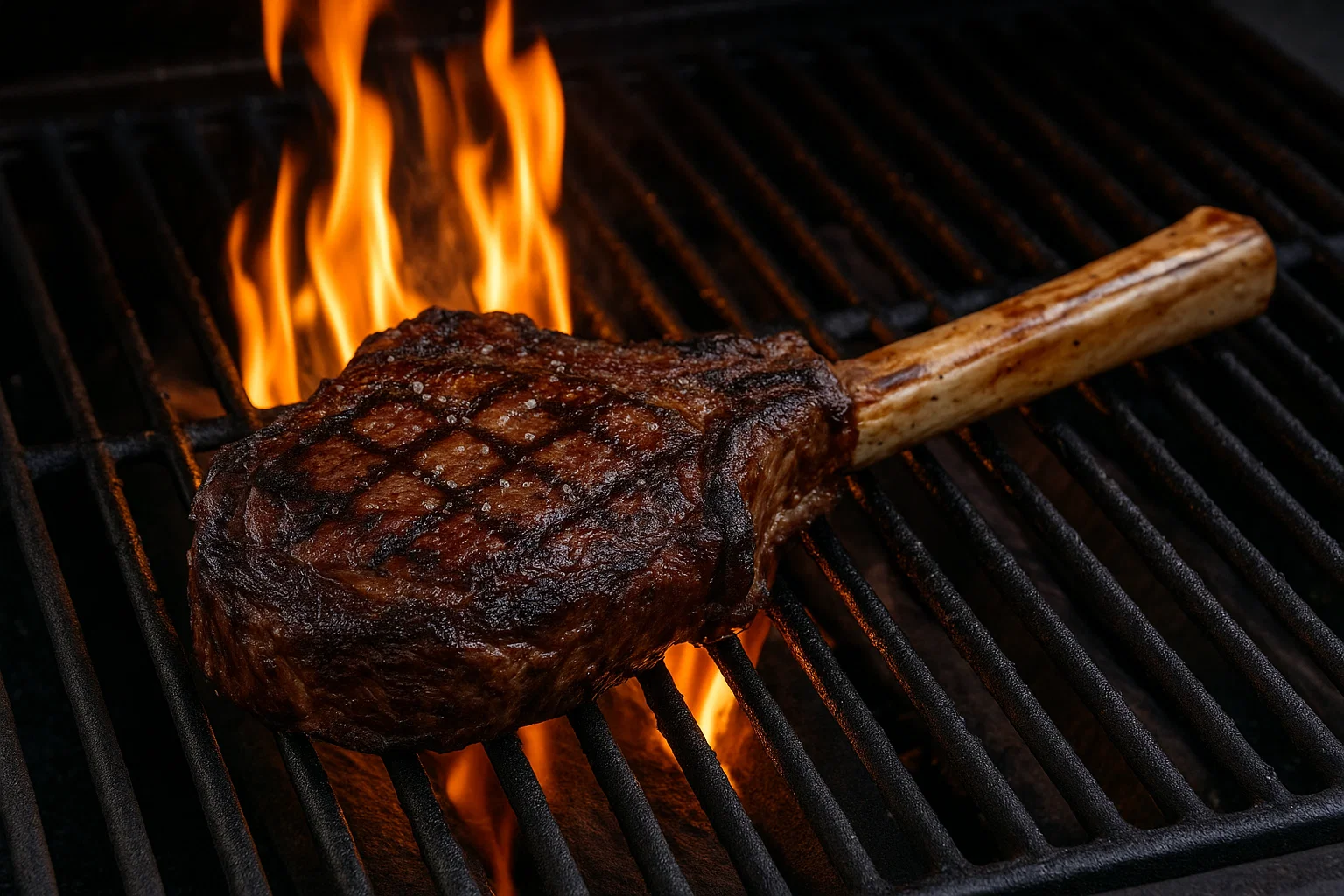
Holding a Tomahawk steak feels primal. It’s not just dinner; it’s an event. I still remember the first time I saw one hanging in my local butcher shop. It looked like a prop from The Flintstones. I bought it on impulse, driven by hunger and a bit of ego, but the second I walked into the kitchen, panic hit me. This wasn’t a cheap supermarket strip steak I could burn for three minutes and cover in A1. This was heavy. It was expensive. My wife took one look at the bone sticking out of the grocery bag and asked if I planned to feed a pack of wolves.
I didn’t want to mess it up. But I did.
I threw that first Tomahawk straight onto a ripping hot charcoal grill. The outside looked incredible—charred, smoky, perfect. But when I sliced into it, the center was raw. Not rare. Raw. And the outer half-inch? A tough, gray, overcooked ring of misery. I chewed through my mistake in total silence.
It took years of trial, error, and burning through a lot of cash to figure it out. If you are wondering “What is the best way to cook a Tomahawk steak,” the answer isn’t about more fire. It’s about patience. It’s about the reverse sear.
More in Beef & Red Meat Category
What is The Best Way to Cook Prime Rib
What is The Best Way to Cook Brisket
Key Takeaways
- Reverse Sear Wins: Cook it low and slow first, then sear it hot at the very end for perfect edge-to-edge color.
- Ditch the Guesswork: You can’t touch-test a steak this thick; buy a digital instant-read thermometer.
- Salt Early: Dry brining hours ahead of time creates a better crust and deepens the beefy flavor.
- Let It Rest: Cutting too soon drains the juice and ruins the texture.
- Watch the Bone: Wrap the exposed bone in foil if you want it to stay pretty for Instagram.
Why Does the Tomahawk Look So Intimidating?
Let’s be real: the bone does the heavy lifting here. A Tomahawk is just a ribeye with at least five inches of rib bone left attached. The butcher scrapes it clean in a process called “Frenching.”
Does that bone add flavor? BBQ purists argue about this constantly. Some say the marrow leaks into the meat. I think the bone acts more like a heat shield. It insulates the meat right next to it, keeping that section tender. But mostly? We buy these because they look insane. They turn a random Tuesday night into a feast.
The fear comes from the thickness. You usually stare down two or three inches of red meat. Standard grilling rules fail here. Cook it like a regular steak, and you torch the outside long before the heat touches the center. You need a different playbook.
Is Dropping That Much Cash on One Steak Worth It?
I wrestled with this early on. Why pay for a bone you can’t eat?
Here is the deal. Tomahawks usually come from the primal rib section—ribs 6 through 12. This is the holy grail of beef. You get the longissimus dorsi (the eye) and the spinalis dorsi (the rib cap). That rib cap is hands down the best bite on the entire cow. It’s loose-grained, packed with marbling, and basically dissolves on your tongue.
Butchers don’t take low-grade meat and turn it into Tomahawks. They save the good stuff for this cut. You pay for the showmanship, sure, but you also pay for superior fat content and flavor.
Why Should You Keep It Off the Grill Initially?
This feels wrong. I know. You want fire. You want noise. But fire is your enemy in the first half of this cook.
Blast this steak with high heat right away, and the muscle fibers seize up. They squeeze out moisture like a wet sponge. You end up with that nasty “bullseye” effect—burnt crust, gray band, and a cold, raw middle. We want the meat to look the same shade of pink from one edge to the other.
To get that, we treat the Tomahawk like a roast first. We need gentle, boring heat. Enter the reverse sear.
How Do You Prep the Beast?
Prep starts way before you strike a match. I learned this the hard way at a Fourth of July cookout. I grabbed the steaks cold from the fridge, salted them, and cooked them immediately. The result? A soggy, gray crust that wouldn’t brown.
Moisture kills your sear.
The Dry Brine Get the steak out of the package. Pat it bone-dry with paper towels. Then hit it with Kosher salt. Don’t be shy. It should look like it snowed on the meat.
Put the steak on a wire rack over a baking sheet and slide it back into the fridge, uncovered. Leave it there for at least 4 hours. 24 hours is even better.
The salt pulls moisture out, dissolves into it, and then the meat sucks that salty brine back in. This seasons the steak deep inside, not just on top. Plus, the fridge air dries out the surface. Dry beef sears; wet beef steams.
Should You Use an Oven or a Smoker?
You don’t need a massive offset smoker to nail this. Your kitchen oven works perfectly because it holds a steady temp.
The Setup Set your oven to 225°F (107°C). Low and slow is the mantra. If you have a smoker, fire it up to the same temp with some hickory or oak. But for this guide, we’ll stick to the oven since everyone has one.
Stick your thermometer probe into the dead center of the steak. Watch out for the bone. Bone conducts heat faster than meat and will give you a fake reading.
Slide the baking sheet into the oven. Now, you wait. It’s not exciting. You are slowly raising the internal temp without cooking the outside. This renders the fat gently and keeps the meat buttery soft.
When Do You Pull the Steak Out?
People get nervous here. They want a time. “How many minutes per pound?” Forget time. The cow doesn’t care about your watch. The cow only cares about temperature.
We are going to sear this thing later, which adds heat. So you must pull the steak before it hits your target doneness.
- Rare: Pull at 115°F.
- Medium-Rare: Pull at 125°F.
- Medium: Pull at 135°F.
I shoot for Medium-Rare every time. I pull my Tomahawk at exactly 125°F. It usually takes 45 minutes to an hour, but I keep my eyes glued to that thermometer.
When you take it out, the steak looks ugly. It’s brown. It’s dull. It looks like boiled beef. Don’t panic. We are about to fix that.
How Do You Get That Crust Without Ruining the Inside?
Switch gears. We go from patience to violence. You need heat—lots of it.
You have two moves: the grill or the cast iron skillet.
Cast Iron or Open Flame?
I love grilling, but for a Tomahawk, I grab the cast iron skillet.
Why? Contact.
On a grill, only the grates touch the meat. In a skillet, the entire face of the steak touches hot metal. You get a solid, mahogany crust that tastes amazing.
The Baste Get your biggest cast iron skillet. Get it ripping hot on the stove. Throw in a high-smoke-point oil like avocado oil. When it smokes, drop the steak in.
Sizzle.
If it doesn’t hiss loudly, pull it out. The pan isn’t ready.
Sear for one minute. Flip it. Now, the magic happens.
Throw in three tablespoons of unsalted butter, three smashed garlic cloves, and a sprig of rosemary. The butter will melt and foam. Tilt the pan. Spoon that hot, nutty, garlic butter over the steak. Over and over. This is called arroser. It cooks the top gently while the bottom sears, and it forces flavor into the crust.
Two minutes total per side. That’s it.
How Long Must You Rest It?
I once cooked a Tomahawk for my father-in-law. I wanted to impress the guy. I nailed the sear, pulled it off the heat, and immediately sliced into it to show off the pink center.
Disaster.
Juice ran everywhere. It pooled on the cutting board like a crime scene. My father-in-law didn’t say a word, but I felt it. That juice on the board was flavor that wasn’t in the meat. When you heat muscle fibers, they tighten up. Cut them too soon, and they dump all their liquid.
Rest the steak. Move it to a board. Tent it loosely with foil.
Wait 10 to 15 minutes.
During this break, the fibers relax. The juices soak back into the meat. When you slice it later, the meat stays moist.
Want to Show Off? Try Caveman Style.
Sometimes you just want to look cool. If you want to freak out your guests, try the Caveman sear.
Skip the pan. Build a hardwood charcoal fire until the coals glow red and have a layer of white ash. Fan off the loose dust.
Take your oven-warmed Tomahawk and throw it directly onto the coals.
Yes. Right on the fire.
It sounds crazy, but it works. The heat is so intense it sears the meat instantly without cooking the inside further. You get a crust that tastes like pure campfire. Just brush off the ash before you eat. It’s messy, primitive, and fun.
How Do You Carve This Monster?
Don’t just hack at it. Respect the anatomy.
- Cut the Bone: Run your knife along the curve of the bone to remove the meat block. Set the bone aside (that’s the chef’s snack—gnaw on it while everyone else serves themselves).
- Separate the Cap: If you want to be fancy, separate the top rib cap from the eye.
- Slice Against the Grain: Check which way the fibers run. Cut perpendicular to them. This shortens the fibers and makes every bite tender.
- Finish with Salt: Sprinkle flaky sea salt over the pink slices. That crunch is the final touch.
What Sides Can Handle This Steak?
A Tomahawk is rich. It’s fatty. Pairing it with mac and cheese is a one-way ticket to a food coma.
You need acid. You need bitterness.
- Chimichurri: My absolute favorite. The vinegar, parsley, and garlic cut right through the beef fat.
- Grilled Asparagus: Char matches the steak, lemon zest cuts the grease.
- Arugula Salad: Peppery greens, parmesan, lemon vinaigrette. Keep it light.
Final Thoughts
The first time I successfully reverse-seared a Tomahawk, it was night and day compared to my early disasters. The crust was crisp and garlicky. The inside was glowing pink from edge to edge. The fat wasn’t rubbery; it was buttery.
So, what is the best way to cook a Tomahawk steak? It’s the method that gives you total control. It’s the reverse sear. It takes the anxiety out of the equation.
Don’t let the price tag scare you. Respect the meat, take your time, and let the process work. And seriously, don’t forget to eat the meat off the bone when no one is looking. That’s the best part.
For more on safe temps, check the USDA’s guide to safe internal temperatures.
FAQs – What is The Best Way to Cook a Tomahawk Steak
What is the best method to cook a Tomahawk steak?
The best method to cook a Tomahawk steak is the reverse sear, which involves slow-cooking the steak low and slow, then searing it hot at the end for an even edge-to-edge doneness.
Why is the reverse sear technique ideal for a Tomahawk steak?
Reverse searing allows the steak to cook evenly from edge to edge, preventing the outside from burning while ensuring the interior reaches the desired temperature, especially given the steak’s thickness.
How should I prepare my Tomahawk steak beforehand?
Start with a dry brine by patting the steak bone-dry, salting it generously, then refrigerating uncovered for at least 4 hours up to 24 hours to enhance flavor and crust formation.
When is the right time to finish the Tomahawk steak with a sear?
You should sear the steak after it has been cooked to just below your target internal temperature, typically around 10-15 minutes before the final desired temperature, to develop a crust without overcooking the interior.
What are the recommended sides to serve with a Tomahawk steak?
Pairs that handle the richness well include chimichurri, grilled asparagus with lemon zest, and arugula salad with parmesan and lemon vinaigrette, as they provide acidity and bitterness to balance the beef’s fattiness.