I ruined so many steaks in my twenties it’s actually embarrassing to think about. There was this one specific Friday night—I was trying to impress a date back in my cramped college apartment. I’d bought two sirloins that looked decent enough under the grocery store lights. I didn’t know what I was doing. I threw them into a cold non-stick pan and basically boiled them in their own gray juices. No sizzle. No smoke. Just the sad, wet sound of meat steaming. When I finally cut into it, the texture was like chewing on a rubber boot.
She was polite about it. She ate a few bites, smiled, and pushed the rest around her plate. But I knew. I had failed. That specific moment of culinary shame stuck with me. It sent me on a ten-year obsession with beef. I needed to redeem myself. I needed to figure out: what is the best way to cook sirloin steak so it actually tastes like a steakhouse dinner and not a shoe?
Here is the truth: you don’t need a thousand-dollar grill. You don’t need a fancy sous-vide machine or a degree in culinary arts. Sirloin is tricky, though. It sits in a weird middle ground. It doesn’t have the insane fat marbling of a ribeye, and it isn’t soft like a filet mignon. But it has a flavor—a deep, iron-rich beefiness—that beats both of them if you treat it right. Treat it wrong, and you get leather.
We are going to fix that. I’ve cooked hundreds of pounds of beef since that disastrous date. I’m going to tell you exactly how to nail this cut. Every. Single. Time.
More in Beef & Red Meat Category
What is The Best Way to Cook Filet Mignon
What is The Best Way to Cook Steak
Key Takeaways
- Heat is Your Best Friend: If your pan isn’t smoking, you aren’t cooking. You need aggressive heat to trigger the Maillard reaction.
- The Cut Matters: Don’t buy generic “sirloin.” Hunt for “Top Sirloin” if you want actual tenderness.
- Butter Basting is Non-Negotiable: Sirloin is lean. Finishing it with a butter bath adds the fat it desperately needs.
- Resting isn’t Optional: Cutting too early spills the gold. Give it 8 to 10 minutes, no matter how hungry you are.
- Ditch the Finger Test: Don’t poke the meat to guess if it’s done. Use a digital thermometer. Pull at 130°F for medium-rare.
Why Do We Even Bother with Sirloin?
We need to get straight on what this piece of meat actually is. Sirloin comes from the rear back of the cow, right behind the ribs. The animal uses these muscles to move. That means the meat is leaner than the lazy muscles in the rib or loin sections. This is where guys get into trouble. You cannot cook a sirloin exactly like a ribeye. You don’t have that safety net of heavy fat to keep it moist if you overcook it.
But here is the trade-off. That exercise gives the muscle a profound flavor. It tastes like meat, not just seared fat. Plus, let’s be real about the price. You can feed a family of four on sirloin for the price of two ribeyes. It’s the working man’s steak. It’s a Tuesday night luxury.
Is the Pan-Sear Actually Better Than Grilling?
If you forced me to pick one method for the rest of my life, I wouldn’t hesitate. The pan-sear wins. Specifically, the cast-iron pan-sear.
I have a heavy, black cast-iron skillet that I’ve practically seasoned with my own sweat over the years. This heavy pan is the secret. Why? Because sirloin loves violence. It loves aggressive heat. You want to create a crust—a dark, mahogany exterior—before the inside dries out. Cast iron holds heat better than stainless steel or flimsy aluminum. When you drop a cold steak into a hot cast iron pan, the temperature doesn’t tank. It stays hot. It sears the meat instantly.
My “aha” moment came when I stopped being afraid of the heat. You need to get that pan smoking hot. Literally smoking. If your neighbors aren’t wondering if you started a small fire, you probably aren’t doing it right.
How Do You Actually Prep the Meat?
Don’t just rip the plastic off and throw the meat in the fire. That is rookie stuff. I learned this from an old-school butcher in Chicago. He watched me eyeing the meat case like a confused puppy and finally waved me over. He told me, “Son, moisture is the enemy of the sear. If it’s wet, it won’t brown.”
Take your steaks out of the fridge at least 45 minutes before you cook them. Seriously. You want them to come up to room temperature. If you throw a fridge-cold steak into a hot pan, the muscle fibers seize up. You get a gray ring of overcooked meat around a cold, raw center.
While they sit, pat them dry. Use paper towels. Get every bit of surface moisture off that meat. If the steak is wet, the heat has to boil the water before it can brown the meat. That creates steam. Steam kills your crust.
Season aggressively. I use coarse Kosher salt and freshly cracked black pepper. Don’t use that pre-ground dust from the shaker. You want texture. Press the seasoning into the meat with your palm. Make it stick.
What Kind of Oil Should You Use?
Butter burns. Olive oil burns. You need an oil that can take a beating. I keep a bottle of avocado oil or grapeseed oil specifically for searing steaks. These oils can handle temperatures upwards of 500°F without turning bitter.
Pour enough oil to coat the bottom of the skillet. Heat it until it shimmers and just starts to whisk wisps of white smoke. That is your green light.
How Hot Should the Skillet Be?
Place the steak in the pan. You should hear a violent sizzle. If it sounds like a gentle rain, take the steak out and wait. You want the sound of a jet engine taking off.
Don’t touch it. This is the hardest part for most home cooks. We want to fiddle. We want to check. Leave it alone. Let the chemistry happen. The proteins and sugars are caramelizing, creating that savory crust. Flip it after about 3 to 4 minutes. You should see a deep brown color. If it looks pale, flip it back over.
Why Bother Butter Basting?
This is the move that turns a home-cooked meal into restaurant quality. Since sirloin is lean, we need to introduce fat. After you flip the steak, toss a few tablespoons of unsalted butter into the pan.
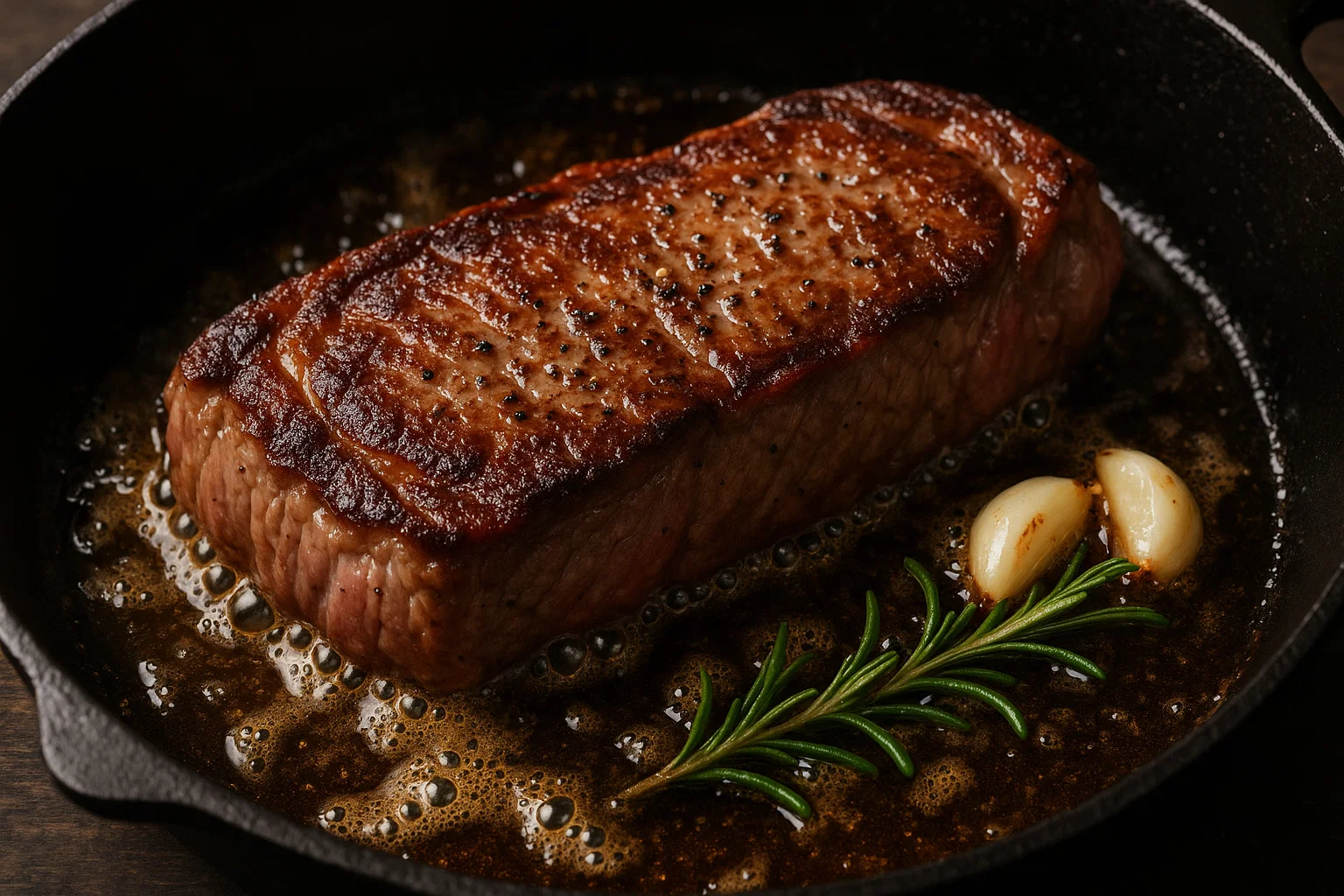
Throw in a couple of smashed garlic cloves and a few sprigs of fresh thyme or rosemary. As the butter melts and foams, tilt the pan slightly. Take a large spoon and scoop that hot, herb-infused butter over the steak. Again and again. The French call it arroser, but I just call it the flavor bath.
The hot butter cooks the steak gently from the top while the pan cooks it from the bottom. It seizes into the cracks of the crust. It adds a nutty, rich sweetness that balances the iron of the meat. I did this once for my father-in-law—a man who strictly grilled everything until it was gray leather—and he stopped mid-chew. He just looked at the steak, then at me, and nodded. That was the highest praise I was ever going to get from him.
Can the Reverse Sear Save You from Disaster?
While the pan-sear is my go-to for standard steaks, sometimes you get a monster cut. If your butcher hands you a sirloin that is nearly 2 inches thick, the pan-sear method risks burning the outside before the middle is cooked.
Enter the reverse sear.
I resisted this for years. It felt wrong to bake a steak. But the results don’t lie. You put the seasoned steak on a wire rack in the oven at a low temperature—about 225°F. You cook it slowly until the internal temperature hits about 115°F.
It looks ugly when it comes out. It looks gray and sad. Do not panic. You take that ugly steak and throw it into your screaming hot cast iron skillet for just one minute per side. Because the meat is already warm and the surface is dry from the oven, it crusts up instantly. You get wall-to-wall pink perfection inside with zero gray bands.
Why Does Low and Slow Work?
The reverse sear works because it dries the surface of the meat in the oven. Remember, moisture is the enemy. It also allows the enzymes in the meat to break down slightly during the slow warm-up, making the steak more tender.
I use this method when I’m hosting a dinner party. It takes the stress out of timing. You can hold the steaks in the warm oven and then just sear them off right before serving. You look like a genius, and you aren’t sweating over a stove while your guests drink your wine.
How Do You Pick the Right Steak?
You can’t cook a bad piece of meat into a good one. When you are staring at the meat case, what are you looking for?
First, look for the label “Top Sirloin.” The sirloin primal cut has a few sections. The “Bottom Sirloin” is tougher and usually used for roasting or grinding. The Top Sirloin is the prize.
Look for marbling. You want to see little flecks of white fat distributed through the red muscle. You don’t want thick veins of hard gristle, but you need those white specks. That fat will render out and baste the meat from the inside.
Check the color. You want a bright, cherry red. If the meat looks brownish or has a rainbow sheen to it, keep walking. I usually ask the butcher to cut them fresh if the ones in the window look tired. They usually respect you for asking.
Does Marinade Actually Work?
This is controversial. A lot of people soak their sirloin in Italian dressing and call it a day. I generally avoid heavy marinades for high-quality sirloin because I want to taste the beef, not the salad dressing.
However, marinades don’t penetrate very deep—maybe a few millimeters. But for a thinner sirloin steak, that might be enough. If you do marinate, include an acid. Lemon juice, balsamic vinegar, or soy sauce helps break down the surface fibers and tenderize the meat.
Just remember to pat it dry before cooking. I cannot stress this enough. If you take a dripping wet marinated steak and throw it in a pan, you are steaming it. Wipe off the excess marinade. The flavor is already in the surface.
Is Resting Really That Important?
If you cut into a steak the second it comes off the heat, you just wasted your money. I know it smells amazing. I know you are hungry. But you have to wait.
When a steak cooks, the muscle fibers contract and squeeze the juices into the center of the meat. If you cut it now, those juices run out onto the cutting board. Your steak becomes dry, and your board becomes delicious.
Pull the steak off the heat and put it on a warm plate or a cutting board with a juice groove. Tent it loosely with foil. Do not wrap it tight, or you will ruin the crust. Let it sit for 10 minutes.
During this time, the fibers relax. The juices redistribute throughout the steak. When you finally slice it, the meat stays juicy.
What Temperature Should You Aim For?
Stop pressing on the steak to check for doneness. The “palm of your hand” trick is unreliable. My hand feels different than your hand.
Buy a digital instant-read thermometer. It costs twenty bucks and saves fifty dollars worth of meat.
For sirloin, I recommend Medium-Rare. That is the sweet spot where the fat renders but the meat stays tender.
- Rare: Pull at 120°F (Final temp 125°F) – Cool red center.
- Medium-Rare: Pull at 130°F (Final temp 135°F) – Warm red center.
- Medium: Pull at 140°F (Final temp 145°F) – Warm pink center.
- Medium-Well: Pull at 150°F (Final temp 155°F) – Slightly pink center.
- Well: Pull at 160°F+ – Gray throughout.
Note that the temperature rises about 5 degrees while it rests. This is called carryover cooking. If you want a 135°F steak, take it off the heat at 130°F.
For more information on safe internal cooking temperatures, you can check the guidelines provided by FoodSafety.gov, which details the standards for all types of meat.
Is Grilling Too Risky?
I love grilling. There is something primal about fire. But sirloin can dry out fast on a grill because you lose that butter-basting element.
If you grill, set up a two-zone fire. Pile your coals on one side (or turn the gas burners on high on one side). Sear the steak over the high heat to get grill marks and flavor, then move it to the cool side to finish cooking gently.
I like to use a compound butter when I grill. Mix some softened butter with garlic, parsley, and blue cheese. Put a slice of that cold butter on the hot steak while it rests. It melts over the meat and mimics the pan sauce you missed out on.
What Sides Work Best?
You have cooked the perfect sirloin. What goes on the plate? You need something to cut the richness.
I avoid heavy mac and cheese with sirloin. It’s too much. I prefer roasted vegetables. Asparagus thrown in the pan with the steak drippings is incredible. Crispy roasted potatoes with rosemary work perfectly. A sharp, acidic salad with a vinaigrette acts as a palate cleanser between bites of beef.
Mushrooms are also a classic pairing. Sauté them in the same pan while the steak rests. They act like little sponges, soaking up the fond (the brown bits stuck to the bottom of the pan).
Can You Save an Overcooked Steak?
It happens. You got distracted, the phone rang, and now your medium-rare target is looking like a hockey puck.
Don’t throw it out. Slice it very thin against the grain. The thinner you slice it, the less tough it will seem. Toss the slices in a sauce—maybe a chimichurri or a peppercorn cream sauce. The liquid will add back some surface moisture, and the thin slicing mitigates the chewiness. Use it for tacos or a steak sandwich instead of a standalone main course.
How to Slice for Tenderness
The direction you cut matters just as much as how you cooked it. Look at the meat. You will see lines running through it. That is the grain of the muscle fibers.
You want to cut perpendicular to those lines. You want to cut across the grain. This shortens the fibers in each bite, meaning your teeth have less work to do. If you cut with the grain, you end up with long, stringy fibers that are hard to chew.
I usually slice the whole steak on the board before serving. It looks professional, stops the cooking process, and ensures everyone gets a tender bite.
Final Thoughts
Learning what is the best way to cook sirloin steak transformed my cooking. It gave me confidence. Once you master the heat control and the resting period, you realize that great food isn’t magic. It is just technique.
My wife doesn’t look at me with pity anymore when I say I’m making steak. Now, she opens a bottle of red wine and gets out the good plates. That redemption feels just as good as the steak tastes.
Get a cast iron skillet. Buy a thermometer. Find a butcher who smiles when you walk in. And for the love of all that is holy, use enough butter. You’ve got this.
FAQs – What is The Best Way to Cook Sirloin Steak
Why is heat so important when cooking sirloin steak?
Heat is crucial because it triggers the Maillard reaction, which develops the flavorful crust on the steak. A smoking-hot pan ensures instant searing, locking in juices and creating the desired Maillard-browned exterior.
How should I prepare my sirloin steak before cooking?
Take the steak out of the fridge at least 45 minutes before cooking to bring it to room temperature, then pat it dry with paper towels to remove moisture, and season it aggressively with coarse salt and freshly cracked pepper, pressing the seasoning into the meat.
What is the role of butter basting in cooking sirloin steak?
Butter basting enriches the lean sirloin by adding fat, flavor, and moisture. During cooking, adding butter, garlic, and herbs to the pan and spooning the melted mixture over the steak helps develop a rich, nutty crust and balances the meat’s natural beefiness.
Why is resting the steak after cooking so important?
Resting allows the muscle fibers to relax and the juices to redistribute throughout the meat, preventing them from spilling out when cut and ensuring the steak remains juicy and tender.