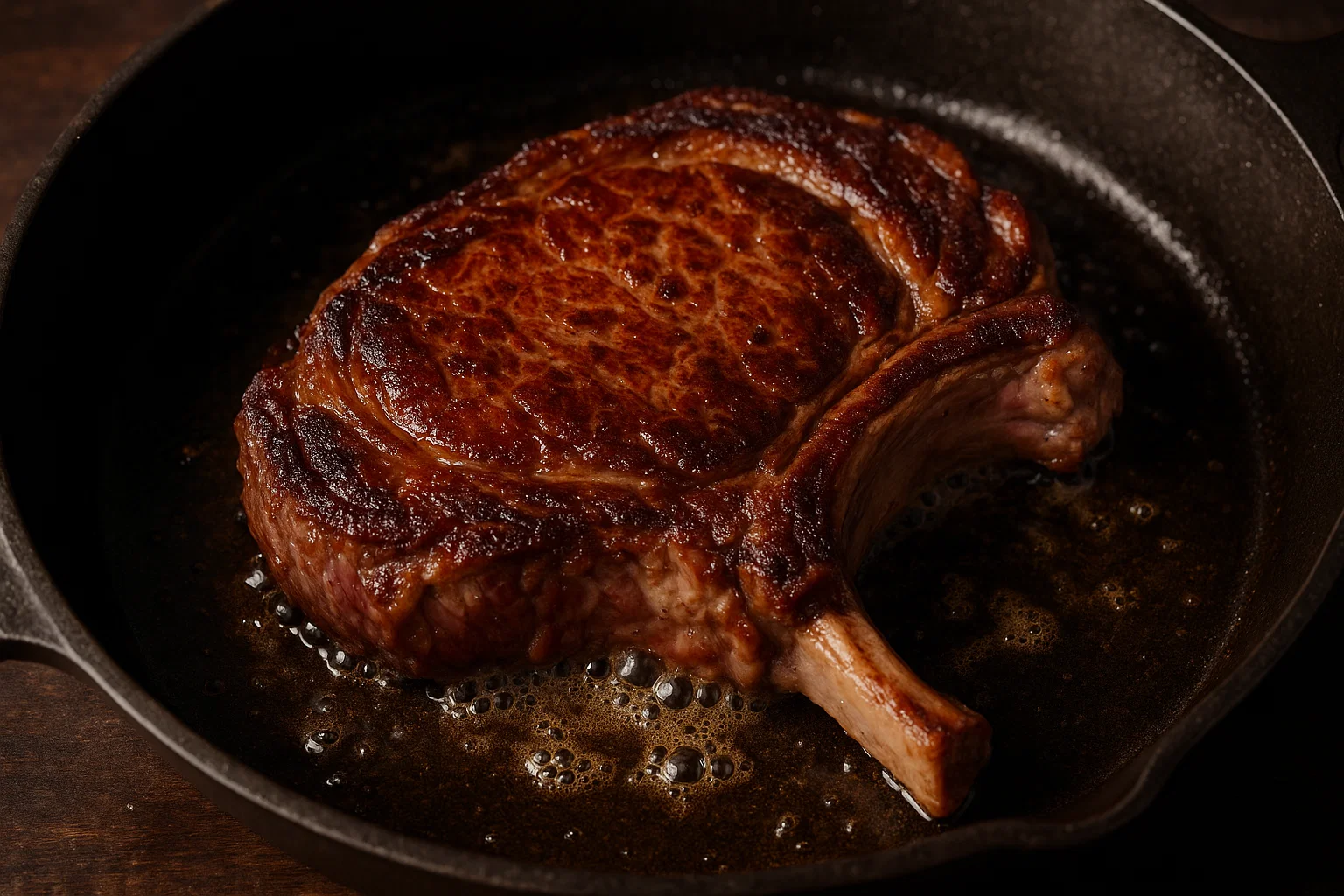
I still remember the absolute tragedy of my first “grown-up” dinner party. I was twenty-two, freshly out of college, and trying desperately to impress a date who was definitely out of my league. I walked into a butcher shop I had no business being in and bought two thick, expensive ribeye steaks. I had confidence. I had a plan. But I also had a flimsy, warped non-stick skillet I’d bought at a discount store for five bucks.
I tossed those beautiful steaks onto the pan. I expected a sizzle. I got a whimper. The result? Gray, rubbery meat that looked like it had been boiled in a shoe. There was no crust. There was no flavor. Just sadness and a very polite date who pretended to enjoy chewing through leather. We didn’t have a second date.
That night haunted me. I became obsessed with redemption. I needed to know, definitively, what is the best way to cook a ribeye? I tried the gas grill, but the fat flare-ups charred the meat before the inside was done. I tried the broiler, but it was inconsistent. Then, I found my grandfather’s old #10 skillet rusting in my parents’ basement. I restored it, seasoned it, and threw a ribeye in there. The moment that meat hit the scorching iron, the sound—a violent, aggressive hiss—told me I had found the answer.
It isn’t about fancy sous-vide machines or expensive outdoor grills. The secret weapon is a heavy, humble piece of iron.
More in Beef & Red Meat Category
What is The Best Way to Cook Filet Mignon
What is The Best Way to Cook Steak
Key Takeaways
- Heat Retention is King: Cast iron holds heat better than any other material, creating an unparalleled sear that stainless steel just can’t match.
- Dry Brining is Non-Negotiable: Salting your meat well in advance draws out moisture and concentrates flavor deep in the muscle fibers.
- The Butter Baste Strategy: Finishing with butter, herbs, and garlic adds a complexity and richness that grills simply cannot replicate.
- Resting is Crucial: Cutting too soon ruins the texture; patience yields the juiciest bite you have ever had.
- Temperature Over Time: Always cook to internal temperature, never by a clock.
Why does the cooking vessel matter so much?
You might think heat is heat, right? Does it really matter if the pan is copper, aluminum, or iron? Wrong. The vessel you cook in dictates how that heat transfers to your food. When we talk about the ribeye, we are dealing with a cut of beef defined by its intramuscular fat, or marbling. This fat needs to render to flavor the meat, but the protein needs high heat to develop a crust. This is the Maillard reaction, and it’s the difference between a steakhouse dinner and a cafeteria lunch.
Aluminum and stainless steel pans often drop in temperature the second a cold steak hits the surface. They recover slowly. In that time, your steak is steaming in its own juices rather than searing. It’s limp. It’s sad.
Cast iron is different. It’s dense. It’s heavy. It holds a grudge. Once it gets hot, it stays hot. When you drop a 16-ounce ribeye into a cast iron skillet, the iron pushes back. It maintains that blistering heat, caramelizing the surface instantly. You aren’t just cooking the meat; you are chemically altering the surface to create flavor compounds that didn’t exist a minute ago.
I learned this the hard way during a winter in Chicago. My gas grill was struggling against the wind, and I just couldn’t get a sear. I brought the steaks inside, grabbed the cast iron, and set off every smoke alarm in my apartment building. My neighbors weren’t happy, but that crust? It was worth the noise complaint.
How do I choose the perfect ribeye at the store?
Before you even touch the stove, you win or lose this battle at the butcher counter. You can have the best technique in the world, but if you buy a lean, sad steak, you’re fighting a losing battle. I used to be intimidated by butchers. I’d just grab the styrofoam pack from the cooler and run. Don’t do that. Talk to them. They know where the good stuff is hiding.
Look specifically for the spinalis dorsi. That’s the “cap” of the ribeye. It’s the crescent-shaped muscle that wraps around the eye of the steak. In my opinion, it is the single best bite of beef on the entire cow. It’s loose, heavily marbled, and melts like butter. You want a ribeye with a large cap. Sometimes you see steaks where the cap has been trimmed away or is barely there—put those back.
Then, look at the white flecks of fat inside the red meat. You aren’t looking for big chunks of hard gristle on the outside; you want fine webbing throughout the muscle. This is marbling. As the steak cooks, this fat melts, basting the meat from the inside out.
Does the USDA grade actually make a difference?
Absolutely. You might think it’s just marketing, but the United States Department of Agriculture grades beef based largely on that marbling we just discussed. It tells you exactly what kind of eating experience you are about to have.
- Select: Leaner, less juicy. Honestly? Avoid this for a premium steak night. It’s fine for a stir-fry, but for a standalone steak, it will disappoint you.
- Choice: The standard. Good marbling, reliable flavor. This is what you find in most supermarkets.
- Prime: The gold standard. Heavy marbling, incredible tenderness. Only about 2-3% of beef gets this grade.
If you can splurge on Prime, do it. But here is a secret: a high-end Choice cut with good spinalis coverage is often a better value than a low-end Prime cut. You can read more about the grading shields and what they mean on the USDA’s official grading page.
Preparation: Should I salt the steak right before cooking?
No. Put the salt shaker down and back away from the stove. If you are asking what is the best way to cook a ribeye, the answer involves time. Patience is the spice you are missing.
I used to salt my steaks and immediately throw them in the pan. The problem? Salt draws moisture out of the meat via osmosis. If you cook it immediately, that moisture sits on the surface. You end up steaming your steak again. You want that moisture gone or reabsorbed.
You want to “dry brine.” Ideally, you salt the steak liberally 24 hours before you plan to eat. Use Kosher salt—the grains are bigger and stick better. Place the steak on a wire rack uncovered in your fridge. The salt draws moisture out, dissolves into a brine, and then re-absorbs into the meat. This seasons the steak deep down, not just on the surface.
Plus, the dry air of the fridge dries out the exterior. Dry meat sears; wet meat steams. It makes the surface tacky and dry, which is exactly what you want for a violent, crunchy sear. If you don’t have 24 hours, even 45 minutes on the counter helps. Just don’t salt it and cook it 5 minutes later.
What oil should I use for such high heat?
This is where I see people ruin good dinners. They grab the Extra Virgin Olive Oil because it’s “fancy” or they think it adds Italian flair. Don’t do it. Olive oil has a low smoke point. At the temperatures we need to sear a ribeye (500°F+), olive oil will burn, turn bitter, and fill your house with acrid smoke that stings your eyes.
You need an oil that can take a beating. You need an oil with a high smoke point.
- Avocado Oil: My personal favorite. It handles heat up to 520°F and has a completely neutral flavor.
- Grapeseed Oil: Excellent, cheap, and handles heat well.
- Clarified Butter (Ghee): Great flavor, high smoke point. Standard butter will burn instantly, but Ghee has the milk solids removed, so it works great.
Save the expensive olive oil for your salad or for finishing the steak after it’s cooked. For the skillet, you want functionality.
The Cook: How do I manage the smoke and the heat?
Get your cast iron skillet hot. I mean, ripping hot. This is the part that scares people. You feel like you are doing something wrong because the pan is smoking. You aren’t. You are doing it right. Place it on the burner on high heat and leave it alone for five minutes. You should see wisps of white smoke rising from the surface.
Turn on your exhaust fan. Open a window. Disable the smoke detector near the kitchen (just don’t forget to put it back). If you aren’t setting off at least one alarm, are you even really searing a steak?
Pat your steak dry with paper towels one last time. Moisture is the enemy of the crust. Rub a little bit of your high-heat oil on the steak itself, not just the pan. This ensures 100% coverage and contact.
Lay the steak into the skillet away from you. This prevents hot oil from splashing onto your hand. Press down gently with tongs to ensure every bit of meat is touching the iron. You want maximum surface contact.
When should I flip the steak?
Patience is a virtue, especially here. Don’t touch it. Let it ride. You want that deep, dark mahogany crust. Usually, this takes about 2 minutes on the first side. Lift a corner. Is it golden brown? Wait longer. Is it dark brown and crusty? Flip it.
Cook the second side for another 2 minutes. You aren’t trying to cook it through yet; you are building flavor. The color is the flavor. If it’s gray, it’s bland. If it’s black, it’s burnt. You want that deep chestnut color.
The Butter Baste: Is it just a chef’s gimmick?
You’ve seen it on cooking shows. The chef throws a knob of butter into the pan and spoons it over the meat. It looks cool, but is this necessary? Yes. It is the specific reason why restaurant steaks taste better than the ones most people make at home. It’s not just for show.
Once you have flipped the steak and established the crust on both sides, turn the heat down to medium. Toss in:
- 3 tablespoons of unsalted butter
- 3-4 cloves of garlic (crushed, skins left on is fine)
- A bundle of fresh thyme or rosemary
The butter will melt and foam. This foaming is crucial. It means the water is cooking out of the butter and the milk solids are browning. This is “brown butter,” and it smells like hazelnuts and heaven.
Tilt the pan so the hot, foaming butter pools at the bottom. Grab a large spoon. Scoop that liquid gold and pour it over the steak repeatedly. This technique, called arroser in French, cooks the steak gently from the top while the pan cooks it from the bottom. It forces that garlic and herb flavor into the cracks of the crust. It literally injects flavor into the meat.
I did this for my dad once. He’s a “meat and potatoes” guy from the Midwest. He usually drowns his steak in A1 sauce before he even tastes it. I watched him take the first bite of a butter-basted ribeye. He chewed, paused, looked at the bottle of A1, and put it back in the fridge. He hasn’t used it since. That was a victory.
How do I know when the steak is actually done?
Please, for the love of food, do not cut into the steak to check. You let all the pressure out, and the juices run away. Do not use the “poke test” (touching your nose or chin to compare firmness). That is a total myth. Everyone’s face feels different, and every cut of meat has a different density. My chin feels different than your chin.
Use a digital instant-read thermometer. It is the only accurate way. It costs twenty bucks and saves you fifty bucks worth of ruined meat.
Here is a guide for when to pull the steak off the heat (remember, it will continue cooking as it rests, rising about 5 degrees):
- Rare: Pull at 120°F (Target 125°F). Cool red center.
- Medium-Rare: Pull at 130°F (Target 135°F). Warm red center.
- Medium: Pull at 140°F (Target 145°F). Warm pink center.
- Medium-Well: Pull at 150°F (Target 155°F). Slightly pink center.
- Well Done: Just order the chicken.
Ribeye is best at medium-rare to medium. You need that internal heat to render the heavy fat deposits. A rare ribeye can sometimes be too chewy because the fat hasn’t melted yet. A filet mignon is great rare; a ribeye needs a little more heat to wake up that fat.
Resting: Why is the hardest part the most important?
You just pulled this beautiful, dripping, garlic-scented masterpiece out of the skillet. You are starving. The smell is intoxicating. You want to slice it immediately.
Don’t. Step away from the meat.
When a steak cooks, the muscle fibers contract and squeeze moisture to the center of the meat. Imagine a water balloon being squeezed tight. If you cut it now, that moisture explodes out onto your cutting board. You will be left with dry meat and a wet board.
Move the steak to a warm plate or a cutting board. Pour the remaining butter from the pan over it. Let it sit for at least 10 minutes.
During this time, the muscle fibers relax. The juices redistribute throughout the steak. When you finally slice it, the juice stays in the meat, not on the wood. It makes every bite succulent. Use this time to pour a drink or set the table.
Can I add anything else to elevate the dish?
While the steak rests, you have a hot pan full of beef fat, brown butter, garlic, and herbs. Do not waste this. This is “liquid gold.”
Throw some mushrooms in there. The cast iron is already seasoned with the best flavors on earth. Sauté them until they are tender. Or, toss in some asparagus. My personal favorite is to throw in thick slices of sourdough bread and fry them in the beef fat. It’s a heart attack on a plate, but it’s the best toast you will ever eat. The bread acts like a sponge for all that flavor you worked so hard to build.
You can also make a quick pan sauce. Splash in some red wine to deglaze the pan (scrape up the brown bits stuck to the bottom), let it reduce by half, and stir in a cold pat of butter. Drizzle that over the sliced steak, and you are eating better than 90% of the population tonight.
Cleaning: Will washing my cast iron ruin it?
There is a pervasive myth that you can never, ever use soap on cast iron. People treat these pans like religious artifacts that can’t be touched by modern cleaning supplies. This comes from a time when soap was made with harsh lye that would strip seasoning. Modern dish soap is gentle. It’s fine.
After dinner, while the pan is still warm (but not scalding), rinse it with hot water. Use a chainmail scrubber or a stiff brush to knock off any stuck-on bits. If it’s really greasy, a drop of soap is fine. You aren’t going to ruin 50 years of seasoning with one drop of Dawn.
Dry it immediately with a towel. Do not let it air dry, or it will rust. I like to put it back on the stove on low heat for a minute to ensure all moisture is gone. Then, wipe a paper towel with a tiny drop of oil around the inside. It’s ready for the next battle. Treat it well, and your grandkids will be cooking steaks in it one day.
Is there a place for the Reverse Sear?
If you have a particularly thick ribeye—say, two inches or thicker (often called a “Cowboy Cut”)—the “sear and finish” method I just described might leave you with a raw center or a burnt exterior. The heat just can’t penetrate fast enough.
For these monster steaks, the “Reverse Sear” is superior. You bake the salted steak in a 225°F oven until it hits about 115°F internal temperature. It will look gray and ugly. It will look unappetizing. Trust the process. Then, you finish it in your screaming hot cast iron skillet for just 45 seconds per side to get the crust.
However, for the standard 1 to 1.5-inch steak you get at most grocery stores, the straight cast iron method is faster, easier, and produces incredible results. It involves fewer steps and fewer pans to clean.
Why is this method better than a restaurant?
Restaurants are businesses. They need to get food out fast. While high-end steakhouses use broilers that reach 1000°F (which is cool), many mid-range places mark the steak on a grill and finish it in an oven. They often skip the detailed butter basting because it requires a chef to stand at one station for two minutes straight, tending to one single steak. They don’t have time for that.
When you cook at home, you have the luxury of time. You can dedicate all your attention to that one piece of meat. You control the quality of the butter, the freshness of the herbs, and the exact resting time.
I have spent hundreds of dollars on steaks at fancy establishments, only to think, “I could have done this better at home.” Once you master the cast iron ribeye, you ruin yourself for steakhouses. You realize you are paying a 300% markup for something you can outperform in your pajamas while drinking a beer that cost two dollars instead of fifteen.
What if I don’t have a ventilation hood?
This is a real struggle. The smoke is inevitable. If you are in a small apartment with poor ventilation, you have a few options to minimize the haze so your neighbors don’t call the fire department.
First, use avocado oil. Its smoke point is 520°F. This helps significantly compared to olive oil or butter (at the start).
Second, manage your heat. You need high heat for the sear, but you don’t need “surface of the sun” heat the entire time. Once the steak is in, you can drop the burner slightly.
Finally, set up a cross-breeze. Open a window on one side of the room and a door on the other. It’s better to be a little chilly for five minutes than to have your fire alarm screaming at you. I keep a box fan specifically for steak nights. I prop it in the window facing out, turning my kitchen into a wind tunnel. It works.
Conclusion
So, what is the best way to cook a ribeye? It is a partnership between good meat and heavy iron. It is the patience to dry brine. It is the courage to let the pan get scary hot. It is the artistry of the butter baste.
Cooking a ribeye in cast iron feels primal. It connects you to the cooking process in a way that pressing buttons on an air fryer never will. There is a danger to it—the popping fat, the heat, the smoke. But the reward is a texture contrast that is the hallmark of great cooking: a crunchy, salty, savory crust giving way to a tender, melting interior.
Go to the butcher. Buy the thickest ribeye they have. Dust off that heavy black skillet. Tonight, you aren’t just making dinner. You are mastering the king of steaks.
FAQs – What is The Best Way to Cook a Ribeye
Why is the choice of cooking vessel so important for cooking a ribeye?
The choice of vessel, particularly cast iron, is crucial because it retains and maintains high heat better than other materials, allowing for a perfect sear and optimal Maillard reaction which develops flavor and crust on the steak.
How can I select the best ribeye steak at the store?
Look for a ribeye with a large spinalis dorsi, the well-marbled cap of the steak, which is the most flavorful part, and check for fine webbing of fat throughout the meat to ensure good marbling, which melts and bastes the steak during cooking.
Should I salt my steak right before cooking?
No, you should dry brine the steak by salting it liberally 24 hours before cooking and letting it rest in the fridge; this draws out moisture, seasons the meat deeply, and results in a better sear.
What is the best oil to use for searing a ribeye at high heat?
The best oils are those with a high smoke point, such as avocado oil, grapeseed oil, or clarified butter (ghee), as they can handle the high temperatures needed for searing without burning.
How do I manage smoke and heat during the cooking process?
Get your cast iron skillet very hot on high heat for the sear, turn on the exhaust fan, open a window, and use a cross-breeze to ventilate smoke, while patting the steak dry and applying a high-heat oil to prevent sticking and ensure a good crust.