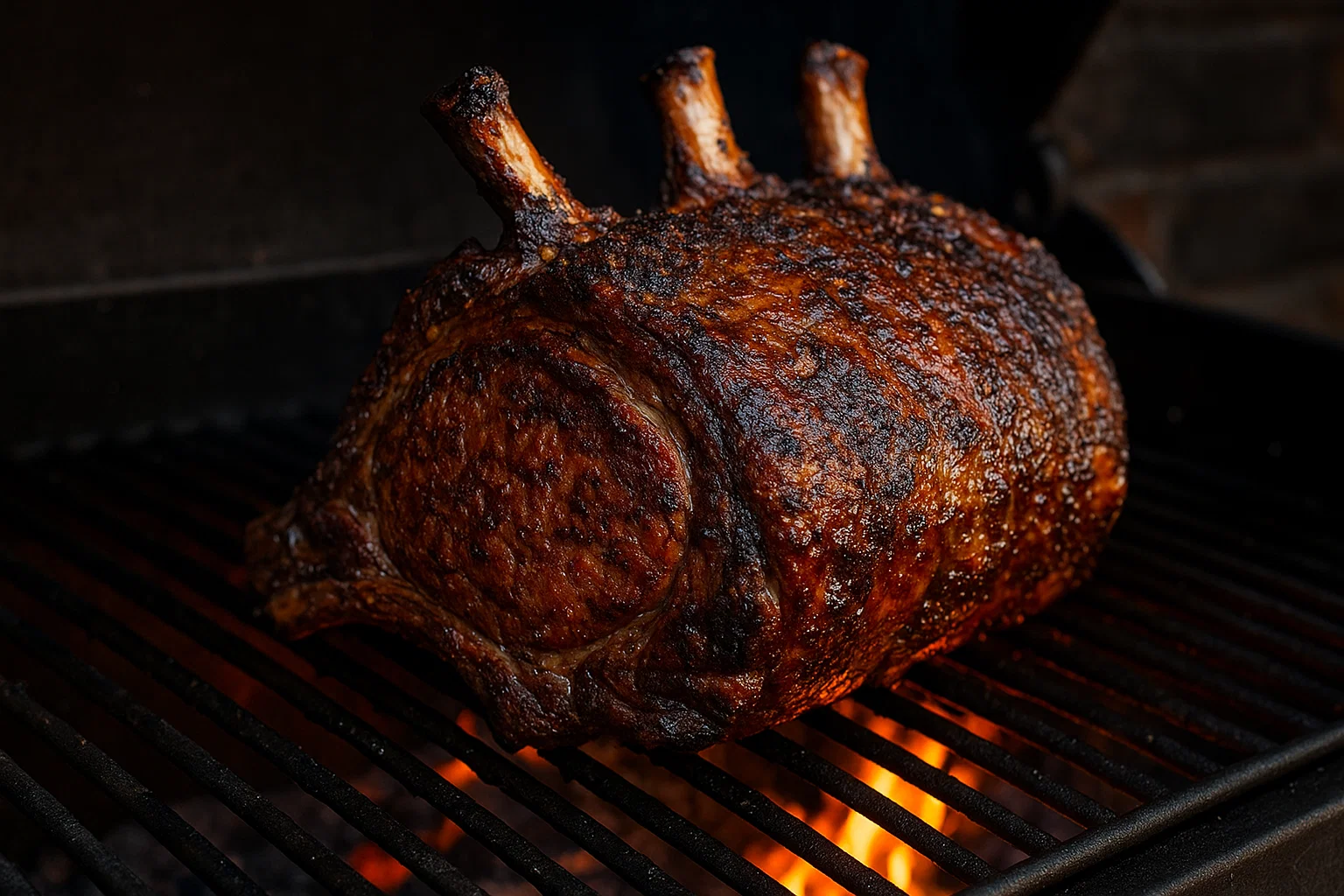
You are standing at the butcher counter, staring at a price tag that makes your wallet physically ache. You just handed over a credit card for a piece of meat that costs more than your first car payment, and now, the cold sweat sets in. You have invited the in-laws, the boss, or maybe just those judgmental friends from college over for dinner. You have exactly one shot to get this right.
I have been there. I remember staring at a seven-pound hunk of prime beef on my kitchen counter back in 2010, realizing I had absolutely no idea how to treat it without ruining it. The stakes feel incredibly high when you are dealing with premium cuts. You look at that marbling, that pristine cap of fat, and you think about how easy it would be to turn it into an expensive leather shoe.
We search for answers. We scour the internet, dig through grandmother’s stained recipe cards, and text our “foodie” friends asking the same question: What is The Best Way to Cook a Rib Roast?
Forget what you think you know about roasting. Forget the high-heat blast. Forget the unpredictable carryover cooking that leaves you with a raw center and a grey, overcooked exterior. The answer is the reverse sear. It changes everything. It takes the stress out of the equation and replaces it with pure, carnivorous joy.
More in Beef & Red Meat Category
What is The Best Way to Cook Prime Rib
What is The Best Way to Cook Brisket
Key Takeaways
- Uniform Doneness: The reverse sear eliminates the “bullseye” gradient, giving you pink meat from edge to edge.
- Moisture Retention: Cooking at low temperatures preserves the juices that high heat evaporates.
- Better Crust: Drying the surface in the oven first allows for a faster, crispier sear at the end.
- Control: This method gives you a massive window of forgiveness, meaning you can time dinner perfectly.
Why Do We Stress So Much About Cooking Prime Rib?
Let me tell you about the Christmas of 2010. I bought a beautiful standing rib roast. It was magnificent—three bones, thick fat cap, deep red color. I followed a “traditional” recipe that told me to blast the oven at 500°F for 30 minutes and then shut it off, leaving the meat inside for hours.
It sounded like magic. It wasn’t.
When I sliced into that roast, the outer inch was grey, dry, and chewy. The very center was cold and raw. My father-in-law chewed politely, but I knew. I could see the disappointment in his eyes. I had ruined the centerpiece of the holiday meal. That shame motivated me to find a better way. We stress because the margin for error with traditional methods is razor-thin. You miss your temperature window by five minutes at high heat, and you move from medium-rare to medium-well. That is a tragedy.
So, What is The Best Way to Cook a Rib Roast Anyway?
The reverse sear flips the script. Traditional roasting relies on high heat to cook the outside and slowly push that heat to the center. The reverse sear treats the roast like a massive, thick steak. You cook it extremely slowly at a low temperature first to bring the internal temperature up evenly. Once the meat reaches your target doneness, you pull it out, let it rest, and then blast it with high heat just to crisp the crust.
That’s it. It sounds simple because it is. But the results rival any high-end steakhouse I have ever visited. When people ask, “What is The Best Way to Cook a Rib Roast,” I don’t even hesitate. It’s this method, every single time. It takes patience, sure, but it rewards you with perfection.
How Does The Reverse Sear Actually Work?
Think about the physics of meat for a second. Meat contains water. When you expose muscle fibers to high heat, they contract violently and squeeze that water out. If you throw a raw roast into a 450°F oven, the exterior muscles clamp down immediately. They wring out their moisture before the center even knows it’s in an oven.
By lowering the temperature to 225°F or 250°F, you gently raise the temperature of the meat. The enzymes that tenderize beef actually become more active as the meat warms up slowly. You are essentially dry-aging the beef while you cook it. The muscle fibers relax rather than seize. You keep the juice where it belongs: inside the roast, not pooling on your cutting board.
Why Does The Traditional High-Heat Method Fail Us?
We grew up seeing pictures of roasts coming out of the oven steaming hot. The old logic dictated that you need to “seal in the juices” by searing first.
Here is the hard truth: Sealing in juices is a myth. It does not exist.
Searing meat does not create a waterproof barrier. It creates flavor via the Maillard reaction (the browning of proteins and sugars), but it does not trap moisture. When you sear raw meat, the high moisture content on the surface requires a massive amount of energy to evaporate before browning can occur. That energy cooks the meat just below the surface, creating that dreaded grey band.
Remember That Grey Ring of Death?
You know exactly what I’m talking about. Slice a roast cooked the old-fashioned way. You see a dark crust, then a thick band of grey, overcooked meat, then a slightly pinker band, and finally a small circle of red in the middle.
That grey ring represents wasted money. It is dry, flavorless meat. The reverse sear eliminates this almost entirely. You get wall-to-wall pink. Every bite is prime.
What Equipment Do You Really Need For This Technique?
You do not need a sous-vide machine or a fancy smoker, though those work great. You just need a reliable oven and, most importantly, a good thermometer.
Do not trust the “poke test.” Do not trust the time-per-pound charts. Cows vary. Ovens vary. The only thing that does not lie is an instant-read thermometer. If you attempt this without a digital probe thermometer, you are flying blind. I use a leave-in probe that connects to a display on my counter so I never have to open the oven door. If you don’t have one, go buy one. It costs less than the steak you are about to cook.
Step 1: How Do You Select The Perfect Cut of Beef?
Go to a real butcher if you can. If you are at the grocery store, look for the “Prime” label, or at least the higher end of “Choice.” You want marbling. Look for those white flecks of fat scattered throughout the red muscle. That fat renders down during the slow cook, basting the meat from the inside out.
Bone-In vs. Boneless: Which One Wins?
This sparks arguments at dinner parties. I prefer bone-in. It looks impressive on the table—a primal, Flintstones-esque feast. The bones also insulate the meat slightly, keeping it tender near the bone. However, a boneless ribeye roast is easier to carve. If you choose bone-in, ask your butcher to “cut and tie” the roast. They sever the bones from the meat and tie them back on with butcher’s twine. You get the flavor benefits of cooking on the bone, but when it’s time to serve, you just snip the string and the bones fall off. It makes you look like a pro.
Step 2: Does Dry Brining Make a Difference?
Yes. A thousand times, yes.
If you have the time, buy your roast 24 to 48 hours before you plan to cook it. Season it liberally with kosher salt on all sides. Do not be shy. Place it on a wire rack set inside a baking sheet and put it in the fridge, uncovered.
This does two things. First, the salt penetrates deep into the muscle fiber, seasoning the meat all the way through, not just on the crust. Second, the cold air of the fridge dries out the surface of the beef. Dry beef browns better. Remember, moisture is the enemy of the sear. If the surface is dry, it browns instantly when it hits the heat. If it’s wet, it steams. Steamed beef is grey and sad.
Step 3: The Slow Cook – What Temperature Should You Aim For?
On the big day, pull your roast out of the fridge about two hours before you start cooking to take the chill off. This helps it cook evenly. Preheat your oven to 250°F. Some purists go as low as 200°F, but 250°F strikes a nice balance between even cooking and not taking all day.
Place the roast on a rack in a roasting pan. You want air circulating all around it. Slide it into the oven.
Now, you wait.
You are looking for an internal temperature of:
- 115°F to 120°F for Rare
- 125°F to 130°F for Medium-Rare (My personal sweet spot)
- 135°F for Medium
This takes time. For a large roast, it could take 3 to 4 hours. But because the temperature is low, the window is wide. If it hits 125°F and your guests aren’t there yet, don’t panic. You have wiggle room.
Step 4: How Long Does The Meat Need to Rest?
When the thermometer beeps, pull the roast out. Transfer it to a cutting board and tent it loosely with foil.
Here is where the reverse sear shines. In traditional high-heat cooking, you must rest the meat for 30-40 minutes so the juices redistribute. With the reverse sear, because you cooked it so gently, the juices are already fairly stable. However, resting allows the meat to cool down slightly.
Why do we want it to cool? Because we are about to blast it with heat. If the interior is already at 130°F and we throw it in a 500°F oven, the center will overcook. By letting the temp drop a few degrees for 20-30 minutes, we buy ourselves insurance for the searing stage. Use this time to drink a glass of wine. You earned it.
Step 5: The Sear – How Do You Get That Crust?
This is the fun part. This is where you feel like a chef.
Crank your oven as high as it goes—500°F or 550°F. If you have a convection setting, use it.
Once the oven is screaming hot, put the roast back in. It needs only about 6 to 10 minutes. Watch it like a hawk. You want the fat to sizzle, bubble, and turn a deep, dark mahogany brown. The smell will drive everyone in the house crazy.
Cast Iron vs. The Oven: Which Sear is Superior?
I have a confession. While the oven blast is easier, I prefer searing smaller roasts in a cast-iron skillet on the stovetop. I throw a stick of butter, some fresh thyme, and garlic cloves into the pan and baste the roast while I sear it. It’s messy. It smokes up the kitchen. My wife usually opens a window and glares at me. But the flavor? Unbeatable.
However, for a massive 4-bone or 7-bone roast, the skillet is impractical. You will hurt yourself trying to flip a 10-pound roast in a hot pan. Stick to the oven method for the big holidays. It minimizes the mess and produces a spectacular crust without the third-degree burns.
How Do You Carve and Serve Like a Pro?
Remove the roast from the oven. Because you already rested it before the sear, you don’t need a long rest now. Give it five minutes just to settle.
Snip the strings. Remove the bones (save them for stock or gnaw on them yourself—chef’s privilege). Slice the meat across the grain. I like thick cuts, at least an inch wide. This is a celebration, not a deli counter.
Serve it with a simple horseradish cream sauce or a red wine reduction. But honestly? If you nailed the reverse sear, the meat needs nothing. It stands alone.
Why Even Bother With Other Methods?
When you look at the results, you wonder why anyone cooks differently. The consistency is unmatched. You eliminate the stress of timing the meal perfectly because the roast can sit at the resting stage for an hour if needed before the final sear.
I cooked a prime rib for Thanksgiving last year using this method. My brother, a stubborn traditionalist who swears by the “closed oven door” method, took one bite. He looked at the edge-to-edge pink. He looked at the crispy fat cap. He put his fork down and just nodded. “Okay,” he said. “You win.”
Is This Method Foolproof?
Nothing in cooking is 100% foolproof, but this is as close as it gets. The only danger is impatience. If you crank the heat too early during the slow-cook phase, you lose the benefits. Trust the process. Trust the thermometer.
For more detailed safety guidelines on handling beef and ensuring you hit the right temperatures, check out this guide from the USDA Food Safety and Inspection Service.
What About the Sides?
You can’t just serve meat on a plate. Well, you can, but people might talk. Since your oven is occupied at a low temperature for hours, you need a strategy. I usually do mashed potatoes on the stovetop. They are classic for a reason. Creamed spinach is another steakhouse staple that works perfectly.
If you need roasted vegetables, do them while the meat is resting. Remember, you have that 30-45 minute window while the roast cools before the sear. Crank the oven to 425°F, roast your asparagus or carrots, pull them out, then crank it to 500°F for the beef sear. Timing is everything.
How Do You Handle Leftovers?
If you are lucky enough to have leftovers, do not microwave them. I repeat: do not microwave them. The microwave destroys the texture you worked so hard to achieve. Slice the cold meat thin and make sandwiches. Or, if you want it warm, heat it gently in a pan with a little beef broth.
I once made a hash with leftover prime rib, potatoes, and onions the next morning, topped with a fried egg. It might have been better than the dinner itself.
Final Thoughts: Why This Matters
Cooking isn’t just about feeding people. It’s about hospitality. It’s about showing people you care enough to learn a skill and execute it well. When you put a perfect roast on the table, you are creating a memory.
FAQs – What is The Best Way to Cook a Rib Roast
Why does the reverse sear method produce better results than traditional high-heat roasting?
The reverse sear method treats the roast like a thick steak, cooking it slowly at low temperatures to prevent the gray, overcooked outer layer caused by high heat, which ensures a uniform, pink interior and preserves juices.
What equipment do I need to successfully use the reverse sear technique?
You only need a reliable oven and a good digital thermometer, ideally with a probe that can be monitored without opening the oven, to accurately track the internal temperature during cooking.
What is the most effective method to cook a rib roast to ensure even and perfect results?
The reverse sear method is the most effective way to cook a rib roast, as it involves slowly cooking the meat at a low temperature first and then searing it at high heat for a perfect crust, resulting in even doneness and maximum juiciness.
How should I prepare my beef before cooking to get the best results with the reverse sear?
Select a prime or choice cut with good marbling, consider dry brining with kosher salt 24 to 48 hours beforehand by salting the meat and refrigerating it uncovered to enhance flavor and browning.
What are some tips for searing the roast to get a perfect crust after slow cooking?
Preheat your oven to high heat (500°F to 550°F), then sear the roast for 6 to 10 minutes until the fat bubbles and develops a deep, dark mahogany crust, and for smaller roasts, using a cast-iron skillet on the stovetop with butter, garlic, and herbs can add extra flavor.