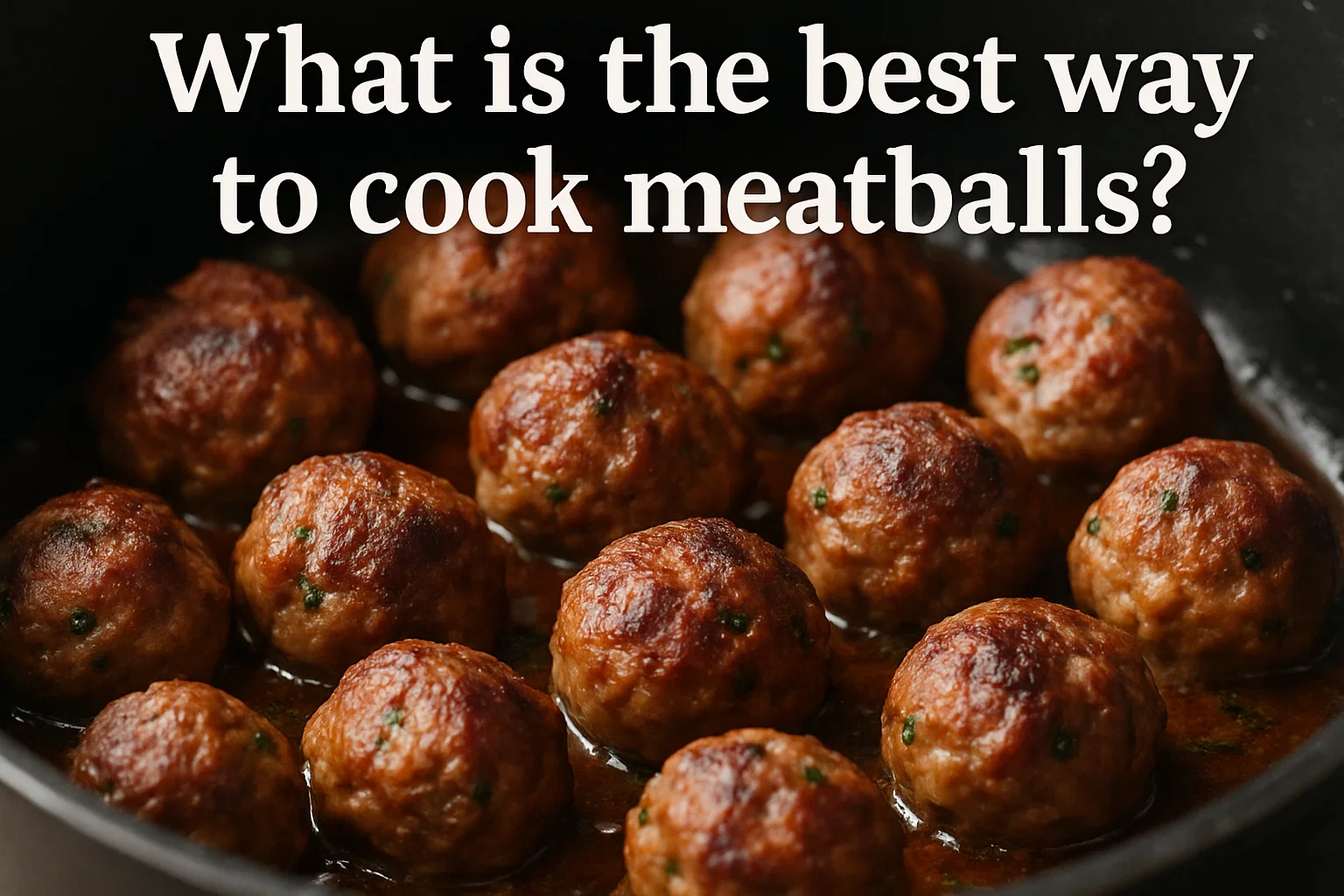
There is a specific smell that hits you when you walk into an Italian-American kitchen on a Sunday around 2:00 PM. It isn’t just garlic. It’s the scent of garlic that has been browning in olive oil for ten minutes, mixed with the earthy punch of oregano and the heavy, savory aroma of beef hitting hot iron. It grabs you by the collar.
For years, I experienced this from a stepstool. I watched my grandmother hover over a heavy, battered cast-iron skillet. She didn’t use a timer. She used her ears. She turned individual meatballs with a fork, moving with the precision of a diamond cutter. To her, that skillet was an altar. To suggest putting a meatball in the oven? Blasphemy. You might as well have poured ketchup on the pasta.
But then I grew up. I got my own kitchen. I faced the harsh reality of tiny apartment ventilation, smoke alarms that go off if you sneeze too hard, and the daunting task of feeding a crowd that outnumbered my grandmother’s Sunday table. I had to ask the hard questions. I had to challenge the dogma.
This brings us to the culinary battleground that splits families and professional chefs down the middle. We need to settle this once and for all. What is the best way to cook meatballs? Is it the grandmother-approved fry, with its dangerous oil splatters and unbeatable crust? Or is it the modern, sane approach of baking, where clean-up takes thirty seconds and you can actually leave the room to drink a beer? I have spent the last decade testing both methods, ruining countless shirts with grease stains and drying out trays of meat in the oven, all to find the truth.
More in Beef & Red Meat Category
What is The Best Way to Cook Beef Short Ribs
What is The Best Way to Cook Flank Steak
Key Takeaways
- Frying creates a flavor profile you cannot fake; the Maillard reaction creates a crust that acts as a flavor bomb for your sauce.
- Baking wins on logistics; you cook fifty meatballs in the time it takes to fry ten, and your stovetop stays clean.
- Texture is the tie-breaker: Fried meatballs offer a crispy exterior and dense interior, while baked ones are softer, almost poachy, and uniform.
- The Hybrid Method is the restaurant secret; searing in a pan and finishing in the sauce gives you the best of both worlds.
- Fat Ratios dictate the method: Lean turkey turns to sawdust in a skillet, while fatty pork blends can leave you with a grease pool in the oven.
Why does the frying pan hold such a chokehold on our memories?
We eat with our ears before we ever take a bite. Drop a raw, cold meatball into shimmering hot oil. Listen to it. That sound is instant gratification. It sizzles. It spits. It pops. That violent noise promises flavor.
Frying relies on conduction. The meat sits directly against hot metal and oil. This triggers the Maillard reaction almost instantly. Proteins and sugars collide and transform into that deep brown, savory crust we all hunt for. You simply cannot replicate that specific, jagged texture in an oven. I remember the first time I tried to cook a “real” dinner for a date in college. I wanted to prove I was a guy who didn’t just survive on ramen and frozen pizza. I decided on spaghetti and meatballs.
I bought the cheapest ground beef the grocery store had. I rolled them into massive, uneven spheres. I threw them into a stainless steel pan that was screaming hot. I spent the next twenty minutes dodging grease bullets like I was in a war zone. Smoke filled the kitchen. My eyes watered. By the time I sat down, I was sweating, my shirt had three distinct oil spots that never came out, and the meatballs were shaped like little charred pyramids because I kept poking them with tongs.
But here is the kicker: they tasted incredible.
That char masked the cheap quality of the meat. The texture contrast between the crispy, almost burnt exterior and the soft inside was addictive. Frying forces flavor into the meat. It creates “fond”—those stuck-on brown bits in the pan—which becomes the liquid gold base for your tomato sauce. If you want maximum flavor impact and don’t mind a little chaos, the skillet remains the heavyweight champion.
Is baking the secret weapon for saving your sanity?
Fast forward ten years. It’s Super Bowl Sunday. I’m hosting. I have twenty hungry guys coming over, and I decided, in a moment of hubris, to make meatball subs. I did the math on a napkin. I needed sixty meatballs.
The thought of standing over the stove, frying six meatballs at a time in my 10-inch skillet, made me want to cancel the party. That would be ten batches. Roughly an hour of active frying. No watching the game. No talking to guests. Just me and the grease.
I turned to the oven.
Baking changes the physics entirely. You utilize convection—hot air—rather than direct conduction. I lined two baking sheets with parchment paper. I rolled the meat. I lined them up like little soldiers, five rows of six. I slid them into a 400°F oven and closed the door.
Here is the magic part: I walked away.
I cleaned the counter. I opened a beer. I watched the pre-game show. Twenty minutes later, I pulled out sixty perfectly cooked, round, juicy meatballs. Did they have that dark, craggy crust? No. They looked a bit uniform, almost too perfect. But my stress level was zero.
When you ask what is the best way to cook meatballs for a crowd, the oven wins, hands down. Baking provides gentle, even heat. This wraps around the meatball, cooking it through to the center without burning the outside. You avoid the “raw center, burnt exterior” disaster that plagues novice fryers. Plus, you save the fat. Instead of the fat rendering out into the frying oil and disappearing, the fat in the oven renders and pools slightly around the meatball, essentially poaching the bottom in its own juices.
Does searing actually seal in the juices, or is that a massive lie?
You hear this phrase constantly on cooking shows. “Sear the meat to seal in the juices.” It is one of the oldest, most pervasive lies in the kitchen. Science tells us a completely different story. Moisture evaporates at high heat. Searing actually drives moisture out of the surface cells. It squeezes the fibers tight.
So why do we believe it? Because we perceive a seared meatball as “juicier.” That crust stimulates our salivary glands. It’s a sensory trick. But in practice, frying can lead to dryness if you aren’t careful. Because the heat is so aggressive, the outer layer of protein contracts tightly. If you overshoot your cooking time by even two minutes in a skillet, you end up with rubber bullets.
Baking is much more forgiving. The ambient heat doesn’t cause that violent protein contraction. If you use a panade (a mixture of breadcrumbs and milk) in your mix, the oven treats it gently, keeping the interior tender. I found that my baked meatballs, while lacking the crust, melted in the mouth in a way the fried ones didn’t. They were softer. More velvety. For a soft sub roll, where the bread provides the chew, the baked texture was actually superior.
Also read: What is The Best Way to Cook a Ribeye
Can you actually get a decent crust without the mess?
This is the million-dollar question. Can we hack the oven to mimic the fryer? I refused to accept the gray, steamed look of a standard baked meatball. It looks sad. It looks like hospital food. I started experimenting with the broiler.
The broiler is essentially an upside-down grill. It blasts intense, direct radiant heat from above. I found a technique that bridges the gap. I bake the meatballs on the middle rack until they are about 90% cooked. Then, I move the tray to the top rack, right under the broiler flame, for the final two minutes.
The result? You get sizzling, bubbling fat and a browned top. It isn’t a 360-degree crust like deep frying, but it gets you 80% of the way there with 10% of the mess. Another trick I learned involves oiling the meatballs themselves. Instead of putting oil in the pan, I brush the raw meatballs with olive oil before they go in. This encourages that frying effect on the surface of the meat as the hot air circulates.
Which method creates the ultimate sauce companion?
We cannot talk about the meatball in isolation. Unless you are eating them Swedish style or as appetizers on a toothpick, they usually end up swimming in a sauce. This is where the frying method pulls a distinct, undeniable advantage.
Remember the “fond” I mentioned earlier? After you fry a batch of meatballs, your pan looks like a disaster zone. It’s covered in stuck-on brown bits and grease. Do not wash that pan. That stuff is flavor concentrate.
You pour off the excess grease, toss in your onions and garlic, and sauté them right in that meat residue. Then you hit it with wine or crushed tomatoes to “deglaze” the pan. As you scrape the bottom with a wooden spoon, those brown bits dissolve into the sauce. They infuse the entire pot with a deep, meaty complexity that you simply cannot get from a jar. It tastes like it simmered for eight hours even if it only simmered for thirty minutes.
When you bake, you lose this step. You have clean meatballs and a separate pot of sauce. Sure, you can dump the baking sheet juices into the sauce (and you absolutely should), but it lacks that caramelized punch. If I am making a Sunday gravy where the sauce is the star, I suffer through the frying process. The flavor depth is worth the scrub time.
How does the meat blend dictate your cooking choice?
Your ingredients boss you around. They dictate your method. I once tried to make turkey meatballs using the same frying method I used for my beef/pork/veal blend. It was a catastrophe.
Turkey is lean. It has no safety net. Without the fat to lubricate the pan and protect the protein, they stuck to the cast iron like superglue. I tore them apart trying to flip them. I ended up with a pan of turkey scramble.
Lean meats like turkey, chicken, or game crave the oven. They dry out instantly in a high-heat skillet. The oven’s consistent temperature treats these delicate proteins with respect. Conversely, if you are using a high-fat blend—say, 80/20 ground beef mixed with pork sausage—frying renders out a lot of that grease. It leaves you with a meatball that isn’t greasy on the palate. If you bake super-fatty meatballs, you sometimes end up with them swimming in a pool of oil on the baking sheet. They come out feeling heavy.
So, look at your package. High fat? Fire up the stove. Lean blend? Preheat the oven.
Also read: What is The Best Way to Cook a Chuck Roast
Are we ignoring the health factor in this debate?
I love fat. Fat is flavor. But my doctor reminds me that my metabolism isn’t what it was when I was twenty-two. Frying meatballs acts like a sponge. Even if you don’t deep fry, shallow frying requires a decent amount of oil. Breadcrumbs in the mixture love to soak up that oil.
Baking allows fat to escape. Gravity does the work. The fat renders out and stays on the parchment paper. You aren’t adding extra oil to cook them. From a calorie density standpoint, baking is strictly better.
But here is the catch: because baking removes fat, you risk losing flavor. You have to compensate. You have to cheat. I add more fresh herbs, more garlic, and maybe a little extra parmesan cheese to my baked batches to make up for the lack of frying oil.
The Hybrid Method: Have we been doing it wrong by choosing sides?
Why are we so binary? Why is it always A vs. B? The best restaurants don’t choose; they combine. The “sear and braise” is the technique that changed my life.
Here is the workflow: You get your skillet screaming hot. You brown the meatballs hard for just 45 seconds on two sides. You don’t care about cooking them through. You don’t care if the middle is raw. You just want that color. You want the Maillard reaction.
Then, you drop these raw-in-the-middle meatballs directly into your simmering pot of tomato sauce.
The sauce acts as the oven. It gently poaches the meatball through to the center. The meatball absorbs the tomato flavor, and the sauce absorbs the meat juices. You get the crust from the sear and the tenderness from the braise. It requires one extra pot, but the payoff is monumental. This is how I cook for my family now. It takes a little more time than straight baking, but the texture is unparalleled.
What gear do you actually need to pull this off successfully?
Tools make the chef. You don’t need a $500 pan, but you need the right materials.
For frying, avoid non-stick pans. I know they are easy to clean. I know they are tempting. But you cannot get a hard sear on non-stick. The coating prevents the meat from truly gripping the surface and browning deeply. You need stainless steel or, preferably, cast iron. Cast iron holds heat incredibly well. When you drop cold meat into it, the temperature doesn’t plummet. It fights back.
For baking, use a rimmed baking sheet. Do not use a cookie sheet without a rim, unless you want a grease fire in the bottom of your oven. And parchment paper is non-negotiable. Scrubbing baked-on protein off a metal sheet is a punishment I wouldn’t wish on my worst enemy.
A quick note on safety: regardless of the method, internal temperature is the only way to know you’re safe. The USDA recommends cooking ground meats to an internal temperature of 160°F. Color is not a reliable indicator. I use an instant-read thermometer. It keeps me from cutting a meatball open to check, which just lets all the juice run out.
Is the air fryer the new contender?
I would be remiss if I didn’t mention the new kid on the block. The air fryer is essentially a high-powered convection oven. It sits right between baking and frying. I tested a batch last week. The circulating air moves faster than a standard oven. It creates a shell that mimics frying better than baking does.
The downside is capacity. Unless you have a massive unit, you are cooking in batches. This negates the time-saving benefit of baking. But for a quick weeknight dinner for two? It works. It dries the exterior out rapidly, so keep an eye on the clock.
What creates the perfect internal texture?
We have talked a lot about the outside, but the inside counts just as much. The cooking method affects the binder. Most of us use breadcrumbs and eggs. In a frying pan, the heat hits the egg quickly. It coagulates the protein fast. This creates a firmer, denser meatball. This is great for spaghetti, where you want the meatball to hold its structural integrity against a heavy fork.
In the oven, the heat penetrates slowly. The egg sets gradually. This results in a soufflé-like effect. The meatball puffs up slightly and stays airier. If you over-mix your meat (a cardinal sin), frying will turn it into a hockey puck. Baking is a little more forgiving of over-working the meat.
The verdict on time vs. quality
Let’s break it down by the clock.
- Frying: 10 minutes prep + 20 minutes active cooking time per batch. High mess.
- Baking: 10 minutes prep + 20 minutes passive cooking time (all at once). Low mess.
If I get home from work at 6:30 PM, I am baking. I need that twenty minutes to shower, set the table, or help with homework. If it is Saturday night and I have a glass of wine in hand and music playing, I am frying. The process becomes part of the leisure.
So, where do we land?
We return to the original question: What is the best way to cook meatballs?
The answer depends entirely on your intent.
If you are chasing the ghost of my grandmother’s Sunday gravy, you must fry. You need that fond. You need that crust. You need to put in the work to earn that depth of flavor. There is no shortcut to nostalgia. If you want the house to smell right, you get out the skillet.
However, if you are feeding a soccer team, prepping meals for the week, or simply value your sanity over a slight increase in crust quality, baking is the superior method. It is consistent, clean, and produces a tender result that appeals to almost everyone.
But if you want the gold medal? You combine them. Sear them hard, then finish them in the sauce. It takes effort. It makes dishes. But when you bite into that meatball—crispy on the edge, meltingly soft in the middle, soaked in red sauce—you realize that the extra step was worth every second.
Cooking isn’t about rigid rules. It’s about adapting to the moment. Sometimes the “best” way is just the way that gets food on the table before everyone melts down. Other times, the “best” way is an act of love that takes all afternoon. Choose your weapon, heat up your kitchen, and just make sure you make enough for leftovers. Because fried or baked, a cold meatball right out of the fridge the next morning is the breakfast of champions.
FAQs – What is the best way to cook meatballs
What are the main differences between frying and baking meatballs?
Frying meatballs creates a crispy exterior with a rich flavor from the Maillard reaction, but it involves more mess and less quantity at a time. Baking offers even, gentle heat, produces softer meatballs with less clean-up, and allows cooking larger batches efficiently.
Does searing meatballs actually seal in the juices?
No, searing does not seal in juices. It actually drives moisture out due to high heat. The prominent perception of juiciness comes from the crust’s texture and flavor, not from sealing in liquids.
Can I get a good crust on baked meatballs without frying?
Yes, you can mimic a crust by using the broiler at the end of baking or oiling the meatballs beforehand to encourage browning, resulting in a more appealing exterior without the mess of frying.
Which method is better for making meatballs for a large crowd?
Baking is generally preferable for large quantities since it allows even cooking with minimal supervision, saves time, and reduces mess, making it ideal for feeding many people efficiently.
How does the type of meat influence the cooking method for meatballs?
Lean meats like turkey or chicken tend to dry out and benefit from baking, while fattier meats such as pork or beef are well-suited for frying to develop flavor and crust, but should be monitored to prevent excess greasiness.